1. Descriptive and Landmark-Based Addressing
In medieval and early modern Europe, letters were addressed using local knowledge. Instead of a house number, the address might read:
“To Master John the Baker, near the Church of St. Mary, London.”
Mail carriers relied on:
-
Landmarks (churches, markets, bridges)
-
House signs (e.g., “The Red Lion”)
-
Occupations
-
Family names
-
Neighborhood or parish names
According to postal historian Richard R. John (1995), early postal systems depended heavily on “face-to-face knowledge networks” and local familiarity rather than standardized numbering systems. Delivery worked because communities were smaller and more socially interconnected.
📚 Source:
John, R. R. (1995). Spreading the News: The American Postal System from Franklin to Morse. Harvard University Press.
2. Use of House Signs Instead of Numbers
Before numbering, many European cities used house signs (symbols or painted images attached to buildings). These signs were often more important than street names.
Historian Miles Ogborn (1998) explains that in early modern London, houses were commonly identified by signs (such as animals or objects), and addresses referenced those visual markers rather than numbers.
📚 Source:
Ogborn, M. (1998). Spaces of Modernity: London’s Geographies 1680–1780. Guilford Press.
3. Social Networks and Community Memory
In smaller towns, postal workers personally knew residents. According to David M. Henkin (2006), in early American cities, postal delivery relied on “social recognition and local familiarity,” meaning carriers knew individuals by name, occupation, or reputation.
Mail might simply say:
“Mr. Samuel Adams, Boston.”
The post office clerk or carrier would identify the person through community knowledge.
📚 Source:
Henkin, D. M. (2006). The Postal Age: The Emergence of Modern Communications in Nineteenth-Century America. University of Chicago Press.
4. Introduction of House Numbering
Systematic house numbering became more common in the 18th century. For example:
-
In Paris, numbering expanded in the late 1700s.
-
In parts of the Habsburg Empire, numbering was introduced for taxation and military conscription.
-
In the United States, large cities gradually adopted numbering in the 19th century.
House numbering was tied not only to mail efficiency but also to state administration, taxation, policing, and surveillance.
Ogborn (1998) notes that numbering reflected growing state power and bureaucratic control.
Summary
Before house numbers:
-
Mail was delivered using landmarks and house signs.
-
Carriers relied on local social knowledge.
-
Communities were small enough for personal recognition.
-
Numbering emerged alongside urban growth and state bureaucracy.
A house number is essential to deliver mail but it wasn't easy for the posties of the past. Explore the history of house numbering.
Here in the archive, we often get asked, ‘I’m researching the history of my house. I know the house number changed in the past, can you tell me more?’. Similar questions come up when researching family or local history too.
The short answer is, the Post Office was never in charge of house numbering so unfortunately, we don’t hold those records. Local authorities are responsible for house numbering, so a local archive might be able to help. However, the Post Office has always had a great interest in house numbers because it makes the job of delivering letters and parcels so much easier. So, here is the longer answer to this question of house numbers.
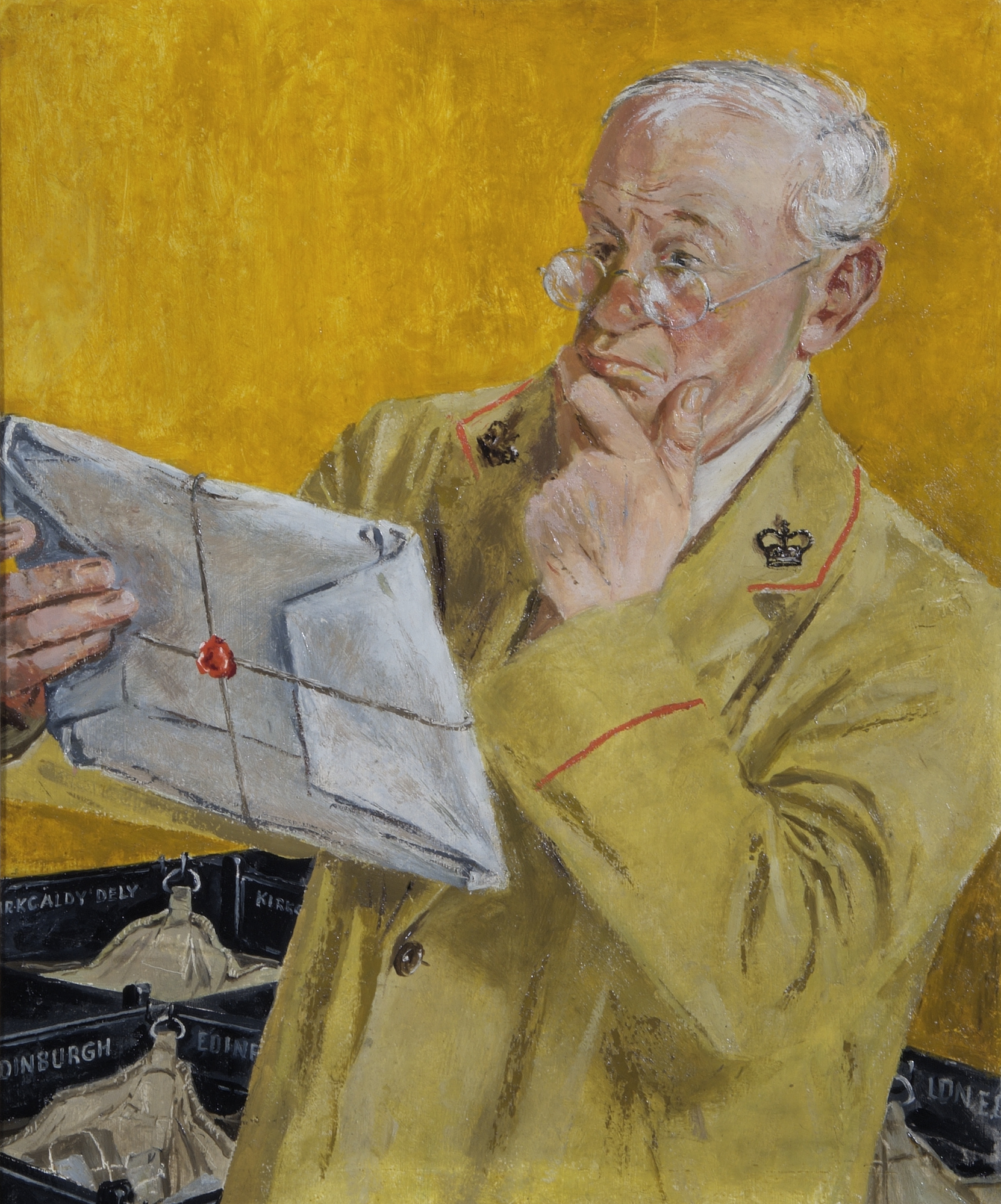
‘Write your address clearly’ oil painting by artist James Fitton, 1958 (POST 109/194)
What did posties do before houses had numbers?
Before house numbers, businesses used illustrated signs to show people where they were, for example, a dragon for an apothecary (the equivalent of a pharmacy today). However, when sending post people had to rely on describing the address as best they could. Over time, the need for house numbers became increasingly clear. In London, one of the first recorded instances of a street being numbered is Prescot Street in Goodman’s Fields in 1708. By the end of the century, the numbering of houses had become well established and seems to have been done on the consecutive, rather than the odd and even principle which we know now.
None of this was regulated and numbering systems varied even in the same street. For example, about 1780, Craven Street in the Strand had three sets of numbers. Street names were also confusing, in 1853 London had 25 Albert and 25 Victoria Streets, 35 King and 27 Queen Streets, 22 Princess and 17 Dukes Streets. There were irregularities everywhere, and the naming of streets and parts of streets was left to the idiosyncrasy or whim of the owner.
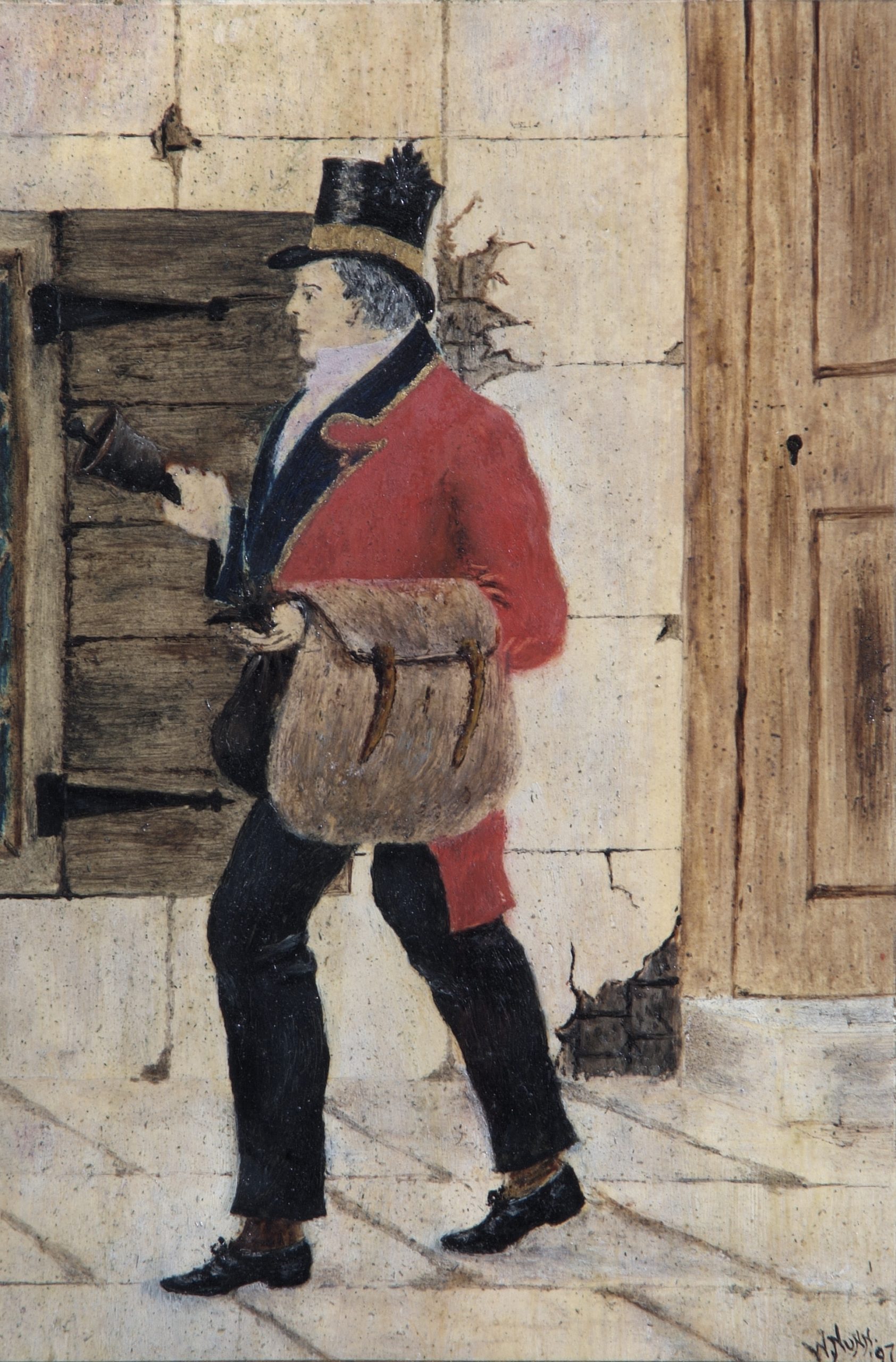
‘London Postman 1830’ oil painting by artist W Nunn, after G Welch, 1897 (2004-0179)
Just imagine the difficulties for the postmen trying to deliver letters! It didn’t help that there was also no standard way of addressing a letter, so posties would also have to deal with addresses like this:
‘To my sister Jean Up the Canongate, Down a Close, Edinburgh. She has a wooden leg’.
Postman’s work rules included the instruction to make every effort to find the correct address by asking people on their route. When delivery was not possible, letters were returned to the so-called ‘Dead Letter Office’, where staff would try to decipher the letters and find the correct address. This still happens today, in a huge warehouse in Belfast (the office goes by a different name nowadays!).
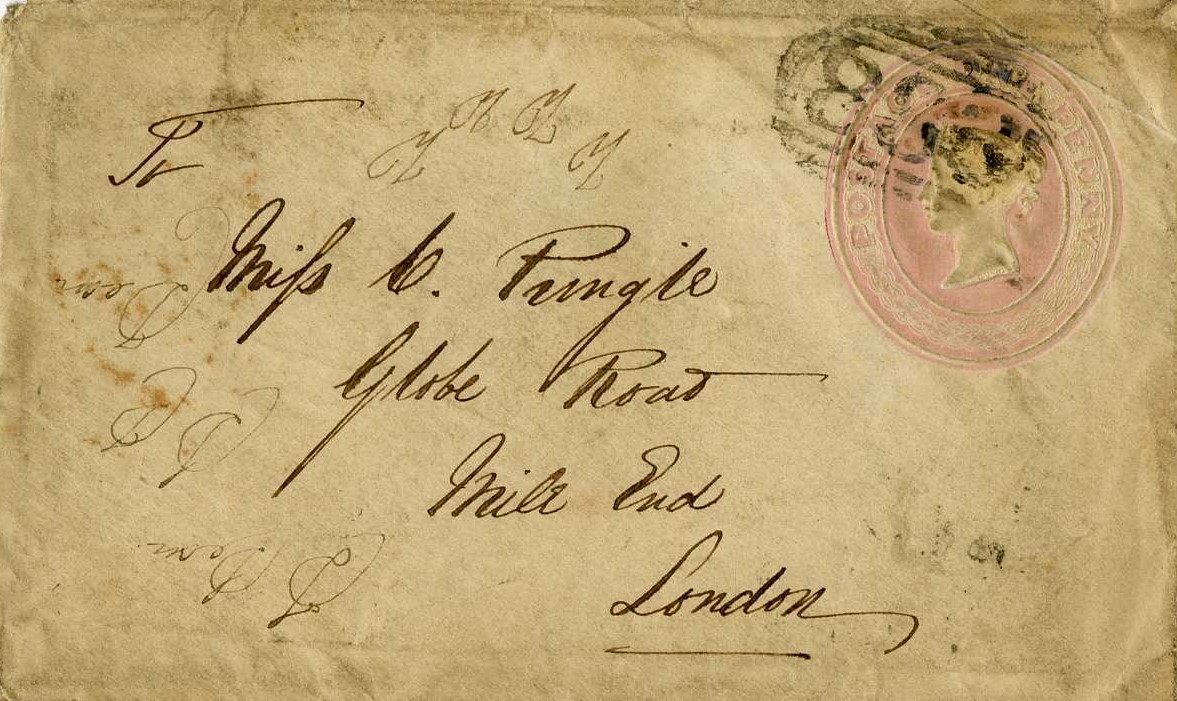
Envelope showing address with no house number, 21 February 1848 (2019-0043/1)
Pressure to regulate house numbers came from the Post Office
There was no regulation of house numbers until 1855 with the passing of the Metropolitan Management Act. For the first time, the power to control and regulate the naming and numbering of streets and houses were set out in law and given to the new Board of Works. Under pressure from the Post Office, the Board started work in 1857 on the simplification of house numbering and street names by working through a hit list of the most confusing streets given to the Board by the Post Office. In the same year, London was split into ten districts giving each a code, for example, EC (Eastern Central), WC (Western Central). This was the very early beginnings of what became the postcode. However, postcodes, as we know them, were not introduced until the 1960s-1970s.
There was some public resistance to changing street names and numbers but, by 1871, 4,800 street names had been changed and 100,000 houses renumbered in London. Even so, it took some time for the use of house numbers to become established with the public.
Postal reformer, Rowland Hill, wrote that:
‘On arriving at a house in the middle of a street, I observed a brass number 95 on the door, the houses on each side being numbered respectively 14 and 16. A woman came to the door, when I requested to be informed why 95 should appear between 14 and 16; she said it was the number of a house she formerly lived at in another street, and it (meaning the brass plate) being a very good one, she thought it would do for her present residence as well as any other’
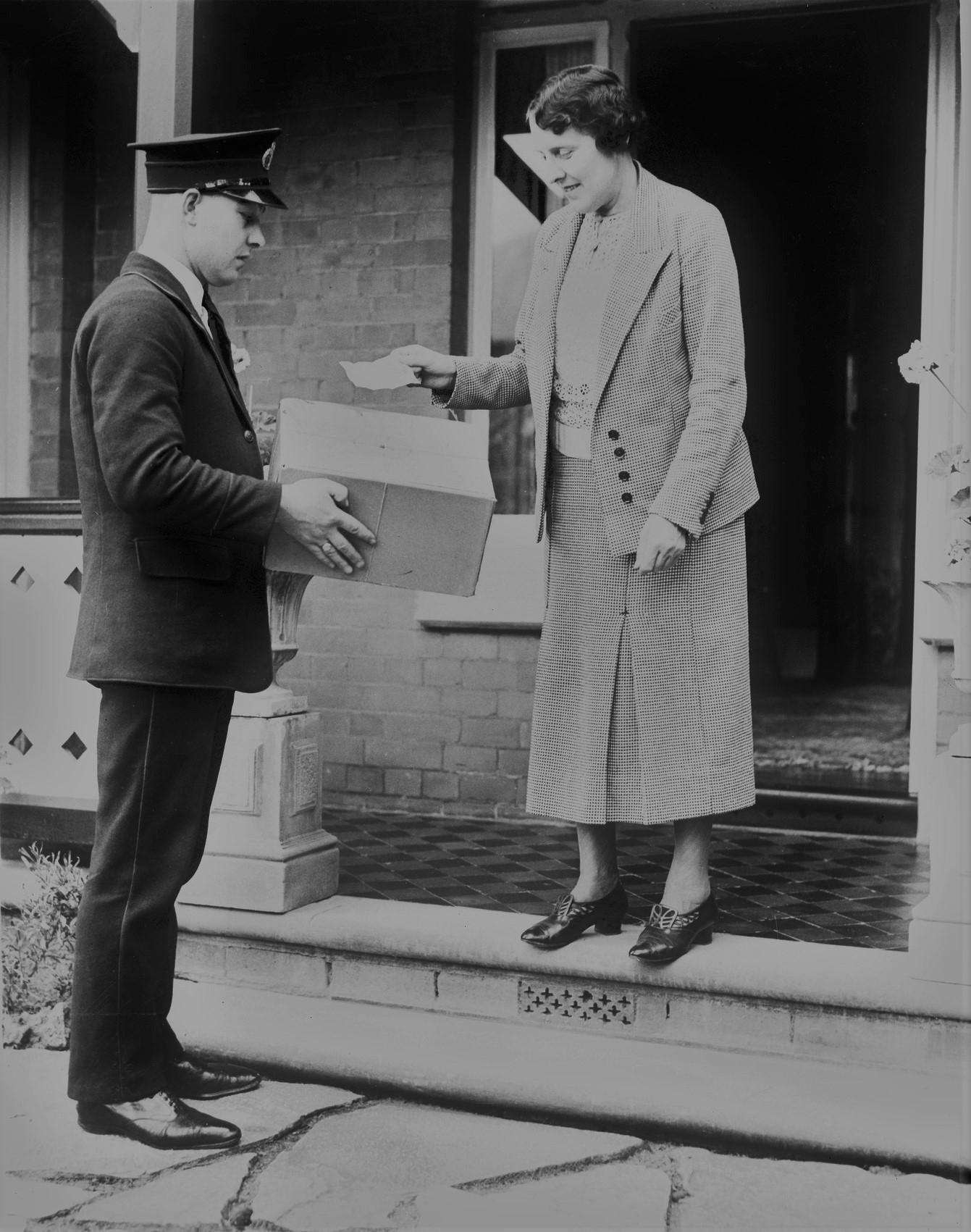
Oxford – Postman on delivery’ photograph, 1936 (POST 118/552)
The mammoth task of renumbering and renaming streets continued into the 20th century. Although house numbering is still decided by local authorities across the UK, there is a booklet here in the archive called ‘GPO Notes on Street Naming and Numbering of Premises’ (January 1966, POST 17/159), which says:
‘The Post Office has no power to insist upon the use of house numbers and street names in postal addresses but once Local Authorities, in fulfilling their statutory authority, complete the task of naming of streets, numbering of premises and insisting upon the exhibition of numbers a great deal can be done by the Post Office in persuading users of the post to help.’
The Post Office certainly lived up to this aim, running numerous publicity campaigns over the years, persuading people to address their post correctly. The archive contains many posters and leaflets on this subject.
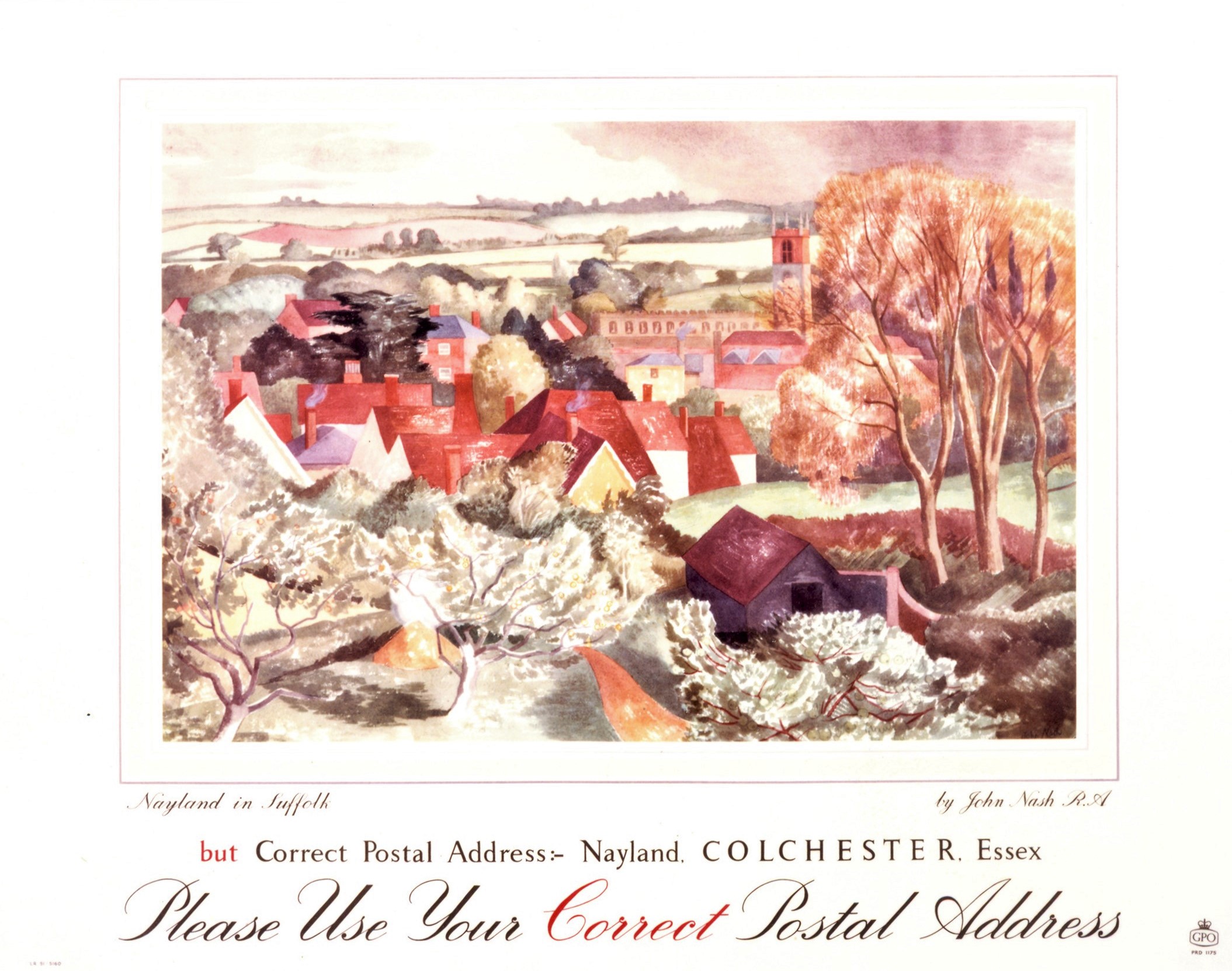
‘Please use your correct postal address’ poster, 1961 by artist John Nash (POST 110/2615)
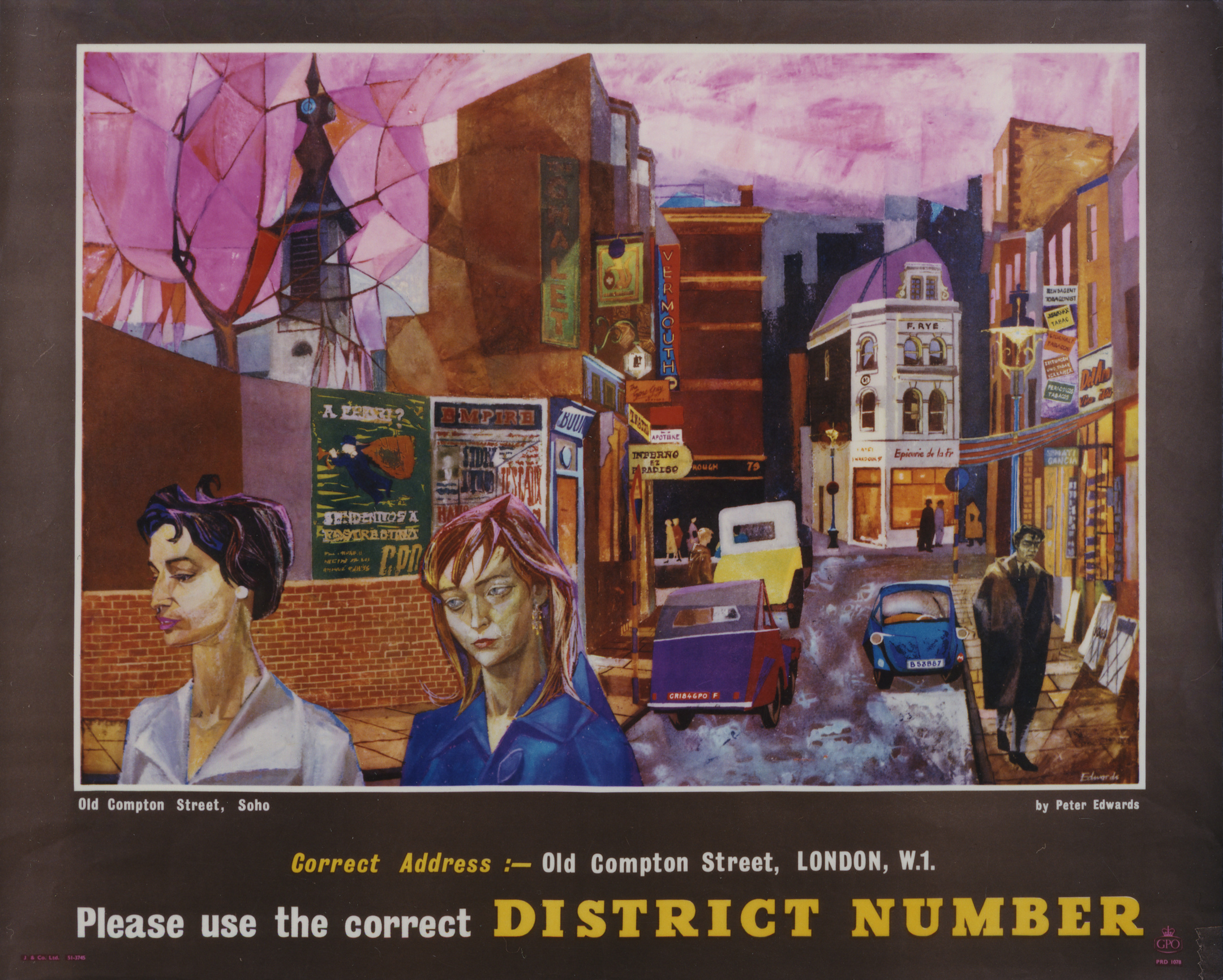
‘Please use the correct district number’ poster, May 1960 by artist Peter Edwards (POST 110/2603)
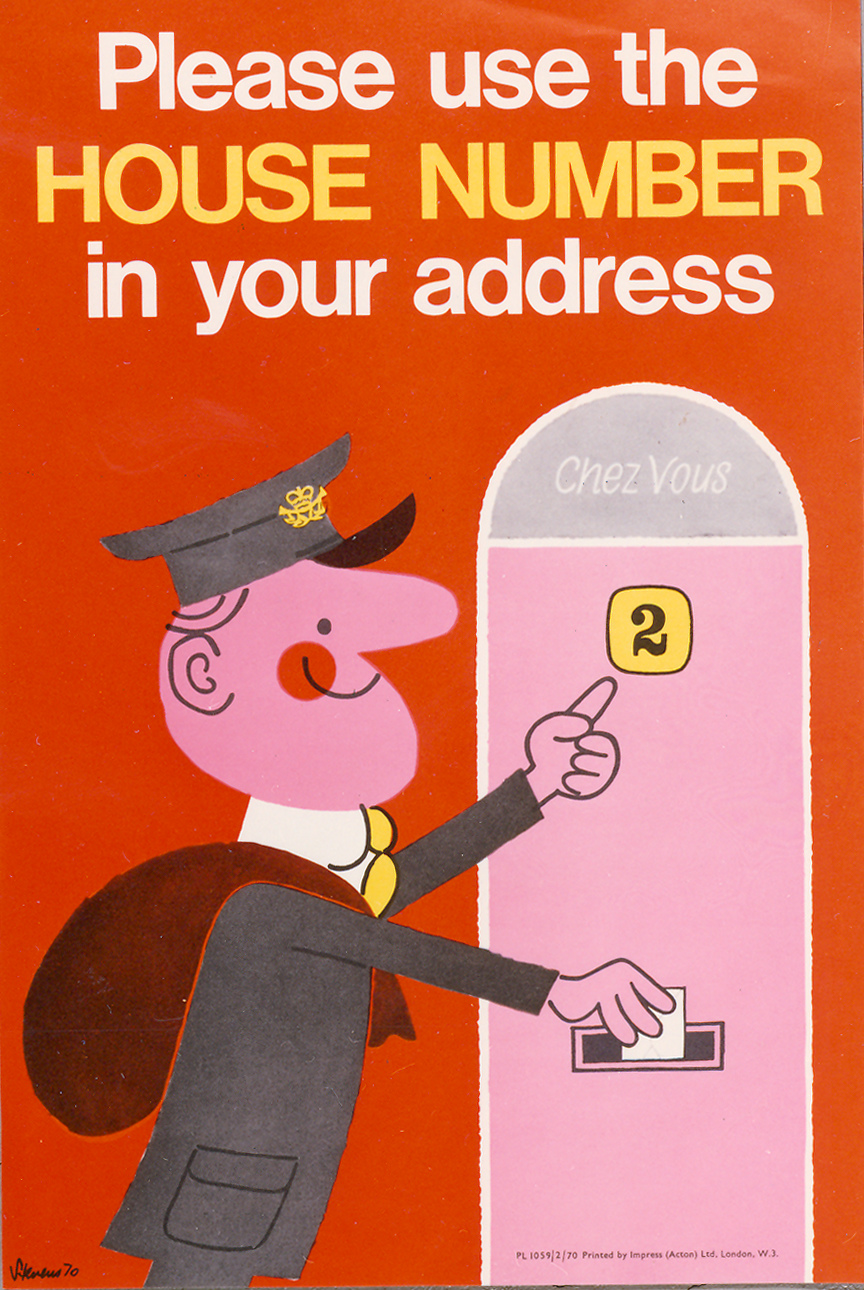
Poster advertising the benefits of correct addressing, by artist Harry Stevens, 1970 (POST 110/0014)
House numbers have transformed the job of delivering our post, especially with all the online shopping we do now. Just imagine being a postie these days without house numbers!
If you’d like to find out more about the work of a postie have a look at this blog. Or if you’re curious about the story of postcodes, have a read here.
– The Archive Team at The Postal Museum


No comments:
Post a Comment