|
Thursday, February 20, 2025
Idioms Why do we say “get your ducks in a row”?
Tuesday, February 18, 2025
Coughing is often triggered by excess secretion in the respiratory tract
Coughing is often triggered by excess secretion in the respiratory tract because the body tries to clear the airways of mucus or other irritants. Here’s how it works:
Irritant Detection: The respiratory tract, including the throat and lungs, is lined with mucus membranes that produce mucus. This mucus traps particles like dust, microbes, and allergens. When these membranes produce more mucus than usual—due to infections, allergies, or irritants like smoke or pollution—the excess mucus can stimulate nerve endings in the airway.
Nerve Stimulation: These nerve endings are part of the body's reflex system designed to protect the lungs. When stimulated by excess mucus, these nerves send signals to the brain.
Cough Reflex Activation: The brain then processes these signals and activates the cough reflex. This reflex involves a deep inhalation followed by a forceful contraction of the muscles in the chest and abdomen, closing the vocal cords. When the cords suddenly open, air rushes out of the lungs at high speed, dislodging and expelling the mucus and irritants.
This mechanism helps keep the airways clear, allowing for easier breathing and reducing the risk of infection. However, persistent or excessive coughing may indicate an underlying health issue that requires medical attention.
Why Do We Wake Around 3am and Dwell on Our Fears?
Why Do We Wake Around 3am and Dwell on Our Fears?
The thoughts are often distressing and punitive. Strikingly, these concerns vaporise in the daylight, proving that the 3am thinking was completely irrational and unproductive. But why?
When I wake at 3am or so, I’m prone to picking on myself. And I know I’m not the only one who does this. A friend of mine calls 3am thoughts “barbed-wire thinking”, because you can get caught in it.
The thoughts are often distressing and punitive. Strikingly, these concerns vaporise in the daylight, proving that the 3am thinking was completely irrational and unproductive.
So, what’s going on?
I’m a psychology researcher with expertise in mood, sleep, and the circadian system (the internal clock regulating sleep). Here’s what the research says about what may be behind this common experience.
What’s Happening in Your Body at 3am?
In a normal night’s sleep, our neurobiology reaches a turning point around 3 or 4am.
Core body temperature starts to rise, sleep drive is reducing (because we’ve had a chunk of sleep), secretion of melatonin (the sleep hormone) has peaked, and levels of cortisol (a stress hormone) are increasing as the body prepares to launch us into the day.
Remarkably, all this activity happens independent of cues from the environment such as dawn light – nature decided long ago that sunrise and sunset are so important that they must be predicted (hence the circadian system).
We actually wake up many times each night, and light sleep is more common in the second half of the night. When sleep is going well for us, we are simply unaware of these awakenings. But add a bit of stress and there is a good chance that waking will become a fully self-aware state.
Not surprisingly, there is evidence the pandemic is a sleep-disturbing stressor. So if you’re experiencing 3am wakings at the moment, you’re definitely not alone.
Stress also impacts sleep in insomnia, where people become hypervigilant about being awake.
Concerns about being awake when one “should” be asleep can cause the person to jolt themselves into anxious wakefulness whenever they go through a light sleep phase.
If that sounds like you, be aware that insomnia responds well to psychological treatment with cognitive behavioural therapy. There’s also a strong link between sleep and depression, so it’s important to speak to your doctor if you have any concerns about your sleep.
Catastrophising in the Wee Hours
As a cognitive therapist, I sometimes joke the only thing good about 3am waking is that it gives us all a vivid example of catastrophising.
Around this time in the sleep cycle, we’re at our lowest ebb physically and cognitively. From nature’s viewpoint, this is meant to be a time of physical and emotional recovery, so it’s understandable that our internal resources are low.
But we also lack other resources in the middle of the night – social connections, cultural assets, all the coping skills of an adult are unavailable at this time. With none of our human skills and capital, we are left alone in the dark with our thoughts. So the mind is partly right when it concludes the problems it’s generated are unsolvable – at 3am, most problems literally would be.
Once the sun’s up, we’re listening to the radio, chewing our Vegemite toast and pushing the cat off the bench, and our 3am problems are put in perspective. We can’t believe the solution of just ringing this person, postponing that thing, or checking such-and-such was overlooked in the wee hours.
The truth is, our mind isn’t really looking for a solution at 3am. We might think we are problem solving by mentally working over issues at this hour, but this isn’t really problem solving; it’s problem solving’s evil twin – worry.
Worry is identifying a problem, ruminating about the worst possible outcome and neglecting the resources we would bring to bear should the non-preferred outcome actually occur.

So, What Can We Do about It?
Have you noticed the 3am thoughts are very self-focused? In the quiet dark, it’s easy to slide unknowingly into a state of extreme egocentricity. Circling round the concept “I”, we can generate painful backwards-looking feelings like guilt or regret. Or turn our tired thoughts to the always uncertain future, generating baseless fears.
Buddhism has a strong position on this type of mental activity: the self is a fiction, and that fiction is the source of all distress. Many of us now practise Buddhist-informed mindfulness to manage stress in the daytime; I use mindfulness to deal with 3am wakings.
I bring my attention to my senses, specifically the sound of my breath. When I notice thoughts arising, I gently bring my attention back to the sound of breathing (pro tip: earplugs help you hear the breath and get out of your head).
Sometimes this meditation works. Sometimes it doesn’t. If I’m still caught in negative thinking after 15 or 20 minutes, I follow the advice from cognitive behavioural therapy, and get up, turn on dim light and read.
This action may seem mundane, but at 3am it is powerfully compassionate, and can help draw you out of your unproductive thinking.
One last tip: It’s important to convince yourself (during daylight hours) that you want to avoid catastrophic thinking. For good reasons not to worry, you can’t go past the Stoic philosophers.
Waking and worrying at 3am is very understandable and very human. But in my opinion, not a great habit to get into.
Greg Murray is a professor and director at Swinburne University of Technology’s Centre for Mental Health.
Thursday, February 6, 2025
Bird flu concerns grow as second strain found in US
Bird flu concerns grow as second strain found in US
Second bird flu strain found in US dairy cattle, USDA says
U.S. dairy cattle tested positive for a strain of bird flu that previously had not been seen in cows, the U.S. Department of Agriculture said on Wednesday, ramping up concerns about the persistent spread of the virus.
The H5N1 virus has reduced milk output in cattle, pushed up egg prices by wiping out millions of hens, and infected nearly 70 people since April as it has spread across the country.
The second strain was the predominant genotype among wild birds this past fall and winter and has also been found in poultry, the USDA said. It was identified in dairy cattle through an agency program
"We're seeing the H5N1 virus itself be smarter than all of us," said Beth Thompson, South Dakota's state veterinarian.
"It's modifying itself so it's not just staying in the poultry and the wild birds likely transmitted the second strain to cattle in Nevada, said J.J. Goicoechea, Nevada's agriculture director. Farmers need to ramp up safety and security measures to protect their animals, he s
Sunday, January 26, 2025
A Day in the Life of a Settler in Colonial America
A Day in the Life of a Settler in Colonial America
There was no one typical day in colonial America — the experiences of colonial families differed based on their location, economic status, and individual circumstances. The colonial era not only spanned a large period of time — from the early 17th century to the late 18th century, before the United States became an independent nation — but it also covered a large and varied landscape. The 13 original American colonies stretched from Massachusetts to Georgia, and were populated by settlers from different parts of Europe whose beliefs, traditions, and lifestyles varied greatly.
Advertisement
Colonial settlements ranged from the growing urban centers of the Northeast to the rural agrarian communities of the Southern colonies, and the daily routines of families were impacted by their environment, which included the influence of Indigenous populations. Colonists often adopted or adapted aspects of Native American culture, including agricultural practices and culinary techniques, in order to survive. Weather conditions, seasons, and the availability of resources also played significant roles in shaping daily life in the colonies. But whether you were a farmer, a merchant, a tradesman, or a wife and mother, day-to-day life in the colonies consisted of long days, hard work, and community connections.
The Workday Started Before Dawn
The workday in colonial America typically began before dawn and lasted until the sun went down, and throughout the day, families dedicated themselves to tasks essential for their survival. The morning started with a modest breakfast of bread and milk, porridge, or cornmeal mush with cider or beer before the work began. This sustenance was much-needed: Depending on the time of year, weather, and season, the typical workday could be up to 12 hours long, six days a week.
Men were expected to provide for their family, and while farming was the primary occupation throughout the colonies, there were a variety of other jobs to be filled, particularly as towns started to grow. Men worked as blacksmiths, carpenters, silversmiths, and in other skilled trades and crafts that contributed to the local economy. Women typically worked in the home, managing all aspects of the household and childcare, including meal preparation and basic education of the children. In addition, married women in non-farming families often worked alongside their husbands in shops or trades, and unmarried or widowed women took jobs as seamstresses, midwives, or tavern keepers. Children often assisted their parents in their work, learning valuable skills for their future roles in the community.
“Dinner” Was at Lunchtime
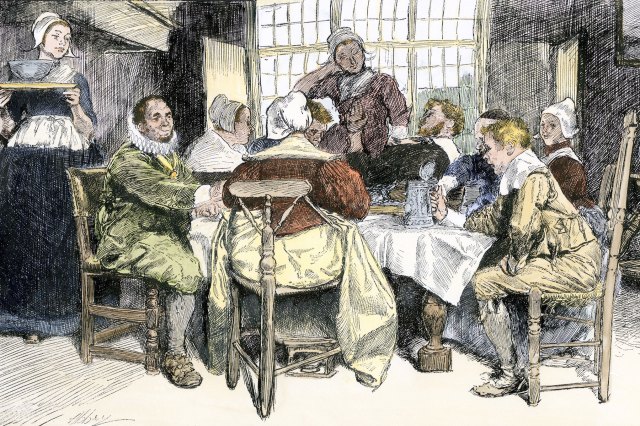
In the colonial era, the midday meal was called “dinner,” and it was the biggest, heartiest meal of the day. Those who worked in town in trades and shops could go to a common hall for a meal of stew made from pork or poultry, and seasonal vegetables such as corn and cabbage. The midday break provided a short period of rest from work, allowing families to connect with neighbors and strengthen social bonds.
For many colonial settlements, the local economy also relied heavily on indentured and enslaved labor. Indentured servants brought from Europe and enslaved individuals, predominantly of African descent, played essential roles in supporting colonial households. Their contributions, though often overlooked, were integral to the success of farms and trades and the day-to-day functioning of many households. Farm laborers, including enslaved workers, would have their dinner brought to them where they worked in the fields.
Advertisement
The Seasons Had a Big Impact on Daily Life
During peak agricultural seasons, such as planting in springtime and harvesting in the fall, the workday for farming families was extended, as all members of the family dedicated themselves to essential tasks on the farm. The demanding nature of these seasons required longer hours to ensure a successful harvest and sustained livelihood. On the other hand, in the winter months or during inclement weather, when outdoor activities were limited, the workday might be shorter. Families would then focus on indoor tasks and household chores, such as preparing food for storage, or weaving and mending clothing.
Clothes were generally made from locally sourced materials, particularly sheep’s wool and cultivated cotton and flax, and families produced their own textiles through spinning and weaving. Everyday clothing was modest and simple, reflecting the practical needs of daily life. Men typically wore shirts, waistcoats, and breeches, while women donned dresses with full skirts covered by long aprons. Both men and women also wore leather shoes or boots, as well as hats made of felt or animal pelts.
Leisure Time Meant Music, Games, and Social Events
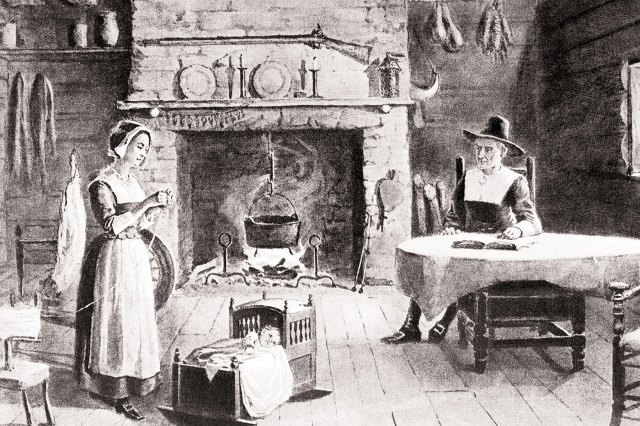
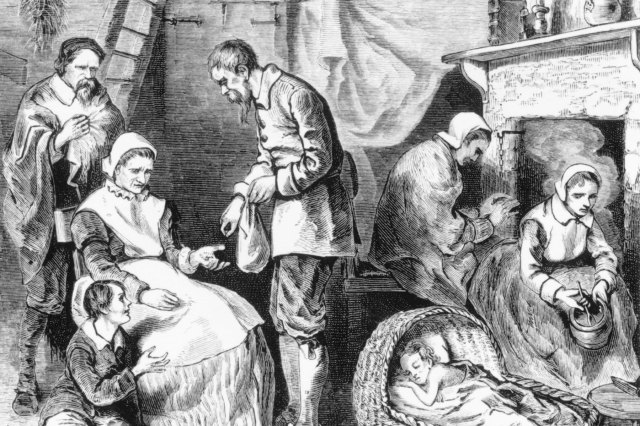
Not unlike today, evenings were a time for more leisurely activities at home or in town. Large families were common in colonial America, and homes were generally modest in size, with a central hearth for cooking and heating that also provided a place for families to spend time together at the beginning and end of the day. After a light supper of leftovers, the family would often gather around the hearth for warmth and engage in storytelling, handiwork, or quiet chores by candlelight.
Homemade entertainment, such as playing musical instruments, singing songs, or playing simple games, were also popular ways for families to spend what little free time they had. Outside of the home, attending church services, gathering in common halls and taverns, and participating in organized social gatherings like fairs and dances offered a chance for neighbors to interact, share meals, and reinforce their sense of community.
At the end of the evening, families would retire to their beds, which were made of woven sacks known as “ticks.” Beds were stuffed with straw or chaff and sometimes layered with a softer feather-stuffed tick and homemade quilts for warmth. Because there were few rooms in the average home, there were rarely any designated sleeping quarters; rather, people slept in living areas with multiple family members sharing a room. Older children slept in one bed and infants and very young children slept next to their mother. With the natural rhythm of daylight and limited artificial lighting, bedtime was early by modern standards — and a necessity for preparing for the long days of physical labor.
Saturday, January 18, 2025
JetBlue Slapped With $2 Million Fine
JetBlue Slapped With $2 Million Fine For "Chronic" Flight Delays By USDOT
Frontier Airlines review
Frontier Airlines, a U.S.-based ultra-low-cost carrier, has received varied ratings across different aspects of its service.
Safety: In 2025, AirlineRatings.com recognized Frontier Airlines as the safest low-cost carrier in the U.S., highlighting its commitment to safety standards.
NEW YORK POST
On-Time Performance: According to aviation data provider Cirium, Frontier Airlines had an on-time arrival rate below 72% in 2024, placing it among the lower-performing U.S. carriers in terms of punctuality.
AP NEWS
Customer Satisfaction: The American Customer Satisfaction Index (ACSI) ranked Frontier Airlines near the bottom among U.S. carriers, with a score of 69 out of 100, just above Spirit Airlines.
NERDWALLET: FINANCE SMARTER
Passenger Reviews: Travelers have reported mixed experiences with Frontier Airlines. Common feedback includes appreciation for low fares but concerns over additional fees, seat comfort, and customer service. For instance, Skytrax reviews indicate an average rating of 2 out of 10 based on 3,751 reviews.
SKYTRAX
In summary, while Frontier Airlines is recognized for its safety and competitive pricing, potential passengers should be aware of its performance in punctuality and customer satisfaction, as well as the possibility of additional fees for services.
Wednesday, January 15, 2025
How Were the Egyptian Pyramids Built?
How Were the Egyptian Pyramids Built?
Engraving of the Pyramids of Giza
Ancient Egypt was home to more than 100 pyramids, many of which still stand today. One of the oldest monumental pyramids in Egypt, the Step Pyramid of Djoser, was built sometime between 2667 BCE and 2648 BCE and began a period of pyramid construction lasting more than a thousand years. The most famous monuments are found at the Giza complex, home to the Great Pyramid, the Pyramid of Khafre, and the Pyramid of Menkaure, all built during the Fourth Dynasty around 2600 to 2500 BCE — the golden age of ancient Egypt.
The Egyptian pyramids stand as one of humanity’s most remarkable architectural achievements, and their incredible precision and massive scale have confounded researchers for centuries. Despite numerous theories and extensive archaeological research, the exact methods of their construction remain a subject of scholarly debate. How did ancient Egyptians erect pyramids using millions of massive blocks weighing as much as 2.5 tons each? And how, more specifically, did they move those blocks up the superstructure? To this day, there is no known historical or archaeological evidence that resolves the question definitively. While popular speculation often veers into fantastical explanations — yes, including aliens — serious historians and archaeologists have given much thought as to how these monumental structures might have been erected using the technological capabilities of the time. Here are three of the most likely construction theories.
Credit: Science History Images/ Alamy Stock Photo
The Herodotus Machine
The first historical account of the construction of the pyramids came from the ancient Greek historian Herodotus in the fifth century BCE. In his Histories, he wrote that the Great Pyramid took 20 years to build and demanded the labor of 100,000 people. Herodotus also wrote that after laying the stones for the base, workers “raised the remaining stones to their places by means of machines formed of short wooden planks. The first machine raised them from the ground to the top of the first step. On this there was another machine, which received the stone upon its arrival and conveyed it to the second step,” and so on. These “Herodotus Machines,” as they later became known, are speculated to have used a system of levers or ropes (or both) to lift blocks incrementally between levels of the pyramid. Egyptian priests told Herodotus about this system — but it’s important to note that this was a long time after the construction of the Great Pyramid, so neither the priests nor Herodotus were actual eyewitnesses to its construction. It is certainly feasible, however, that the machines he described may have been used, either by themselves or, more likely, in conjunction with other methods.
You may also like
Map of Virginia
Why Are Pennsylvania, Massachusetts, Virginia, and Kentucky Called Commonwealths?
U.S. Constitution document
10 Facts About the First 10 Constitutional Amendments
Military ships at sea
What Was the War of 1812?
Advertisement
More from our network
History Facts is part of Optimism, which publishes content that uplifts, informs, and inspires.
6 Tricks Grocery Stores Use To Influence What You Buy
6 Tricks Grocery Stores Use To Influence What You Buy
Interesting Facts
8 Hidden Car Features That Will Change Your Driving Game
8 Hidden Car Features That Will Change Your Driving Game
Better Report
Do You Know What the “P” in “P.M.” Stands For?
Do You Know What the “P” in “P.M.” Stands For?
Word Smarts
6 Often-Overlooked Spaces in Your Home To Declutter Right Now
6 Often-Overlooked Spaces in Your Home To Declutter Right Now
House Outlook
Why You Shouldn’t Go to Bed With Wet Hair
Why You Shouldn’t Go to Bed With Wet Hair
Unique Beauty
Advertisement
Credit: ClassicStock/ Alamy Stock Photo
The External Ramp Theory
Archaeologists generally agree that a system of ramps must have been used, in some form or another, to drag the millions of blocks into their positions in the various pyramids. While there’s no remaining physical evidence of external ramps at the Great Pyramid, traces can be seen around some of the other Old Kingdom structures. One initial theory posited the use of a single, linear ramp built on one side of the pyramid, which would have been gradually raised as the pyramid progressed. But, considering that an 8% slope is about the maximum possible slope for moving such heavy blocks, a ramp such as this would have needed to be about a mile long to reach the top of the pyramid. That would mean constructing the ramp would have been as much of a task as building the pyramid itself, making the theory unlikely, especially for larger structures such as the Great Pyramid. There are a few other ramp theories, however. One proposes that a series of switchback, or staircase, ramps could have been built, zigzagging up just one face of the pyramid. Traces of these have been found at the Sinki, Meidum, Giza, Abu Ghurob, and Lisht pyramids. Other archaeologists have speculated that a spiraling ramp could have been used, which would have wrapped around the entire pyramid. This is a popular theory, although it does have its problems. As with the straight or linear ramp, this ramp would potentially have been a mile long if it was used to build the Great Pyramid, making it in itself a massive construction project. It’s also not clear how workers could have maneuvered 2.5-ton blocks around the corners of the ramp. Archaeologist Mark Lehner did make a practical demonstration of how this could be done, but it was on a far, far smaller pyramid.
Credit: Classic Image/ Alamy Stock Photo
The Internal Ramp Theory
In 2007, the French architect Jean-Pierre Houdin offered a new theory to solve the mystery of how Egypt’s Great Pyramid was built. Using archaeological research combined with 3D computer modeling, he argued that the Egyptians used an internal — rather than external — system of ramps to build the pyramid. Workers, he theorized, used an outer ramp to build the first 141 feet, then constructed a spiraling inner ramp to carry stones to the apex of the 482-foot-tall pyramid. Using this technique, Houdin argued, the pyramid could have been built by around 4,000 people instead of 100,000, as other theories suggest.The internal ramp theory was met with much intrigue, with some archaeologists skeptical and others arguing that it’s as valid as any other concept. Interestingly, Houdin’s proposal would explain why no evidence of ramps has been found at the Great Pyramid: They could be still there, hidden inside the structure. He and his team continue to work on the hypothesis, in search of definitive evidence of internal ramp structures with the help of 3D scanning technology. Whether concrete proof will ever be found to support one particular theory is yet to be seen. It’s entirely possible, of course, that the Egyptians utilized various construction techniques when building the pyramids, combining levers and both external and internal ramps — as well as other possible methods — to overcome whatever challenges came their way.
Sunday, January 5, 2025
10 Most Commonly Stolen Vehicles in California (2022 Data)
10 Most Commonly Stolen Vehicles in California (2022 Data)
Here’s a list of the most commonly stolen vehicles in California, courtesy of the National Insurance Crime Bureau (NICB):
- Honda Civic (2000 model most targeted)
- Honda Accord (1997 model most targeted)
- Toyota Camry (1999 model most targeted)
- Toyota Corolla (2014 model most targeted)
- Chevrolet Silverado (2004 model most targeted)
- Ford F-150 (2006 model most targeted)
- Nissan Altima (2015 model most targeted)
- GMC Sierra (2005 model most targeted)
- Honda CR-V (2001 model most targeted)
- Dodge Ram (2001 model most targeted)
Why These Vehicles?
- Older Models: Popular vehicles manufactured before the mid-2000s often lack advanced anti-theft technology, making them easier to steal.
- High Parts Demand: These vehicles are reliable and widely owned, creating a lucrative black market for spare parts.
- Catalytic Converters: Trucks like the Silverado and F-150 are targeted for their catalytic converters, which contain precious metals.
The 10 most commonly stolen vehicles in California, as reported by the National Insurance Crime Bureau (NICB), often include older models of popular cars like Hondas, Toyotas, and trucks. This trend can be explained by several factors:
1. High Popularity of Certain Models
- Vehicles like the Honda Civic, Honda Accord, and Toyota Camry are widely owned. Their prevalence increases the likelihood of theft because:
- More vehicles on the road mean more targets for thieves.
- Demand for parts from these cars is high in both legal and illegal markets.
2. Value of Spare Parts
- Older models often have interchangeable parts that are easy to sell.
- Engines, catalytic converters, airbags, and radios from these vehicles are frequently stolen for resale.
3. Lower Security Features
- Older vehicles lack modern anti-theft technologies like:
- Immobilizers.
- GPS tracking systems.
- Advanced keyless entry systems.
- This makes them easier for thieves to target.
4. Catalytic Converter Thefts
- Trucks and SUVs, like the Chevrolet Silverado, often top the list because their catalytic converters are easily accessible and contain valuable metals such as platinum, palladium, and rhodium.
5. Black Market Demand
- Parts for vehicles that are no longer manufactured, such as older Toyota pickup trucks, can fetch high prices in the black market.
6. Targeting Specific Regions
- California’s population density and urban areas increase opportunities for theft.
- Ports in California allow stolen vehicles to be quickly exported.
7. Ease of Resale
- Popular vehicles blend in, making them less noticeable to law enforcement.
- Thieves often forge documents to resell these vehicles in other states or countries.
Tips to Prevent Vehicle Theft
Tips to Prevent Vehicle Theft
- Use Anti-Theft Devices:
- Steering wheel locks (e.g., The Club).
- Car alarms.
- GPS tracking systems.
- Park Smart:
- Park in well-lit areas or garages.
- Use surveillance cameras if parking at home.
- Etch Your VIN:
- Engraving your vehicle identification number (VIN) on windows and parts can deter thieves.
- Install a Kill Switch:
- A hidden switch disables your car’s ignition system.
- Lock Your Car:
- Always lock doors, close windows, and never leave keys or valuables inside.
- Be Alert:
- Stay updated on theft trends in your area.
Vallejo crime rate
Vallejo, California, has a crime rate higher than both state and national averages. According to NeighborhoodScout, Vallejo's crime rate is 52 per 1,000 residents, placing it among the highest in the U.S. Residents face a 1 in 19 chance of becoming a victim of either violent or property crime. The violent crime rate is notably high, with a 1 in 102 chance of being a victim, and the property crime rate stands at 43 per 1,000 residents.
NEIGHBORHOODSCOUT
AreaVibes reports that Vallejo's total crime rate is 5,206 per 100,000 people, exceeding the national average by 124%. Violent crimes, including assault, robbery, rape, and murder, are 163% higher than the national average, while property crimes are 116% higher.
AREAVIBES
CrimeGrade.org assigns Vallejo a B grade for overall crime, indicating that the city's crime rate is slightly lower than the average U.S. city. However, crime rates vary within the city; the north part is generally considered safer, with a 1 in 43 chance of being a crime victim, compared to the west neighborhoods, where the chance is as high as 1 in 18.
https://www.neighborhoodscout.com/ca/vallejo/crime?utm_source=chatgpt.com
The Vallejo Police Department provides a crime mapping dashboard for real-time information on crime incidents, offering residents insights into local crime trends.
VALLEJO POLICE DEPARTMENT
https://www.areavibes.com/vallejo-ca/crime/?utm_source=chatgpt.com
In summary, Vallejo experiences higher crime rates compared to state and national averages, with significant variations across different neighborhoods. Residents and visitors should remain vigilant and consult local resources for the most current information on safety and crime prevention.
https://www.neighborhoodscout.com/ca/vallejo/crime?utm_source=chatgpt.com
Recent Trends in California's Crime Policies
The Atlantic
Why California Is Swinging Right on Crime
209 days ago
Saturday, December 21, 2024
Pharmacology
| NURS | D93PL | 02 | DA | 0.500 | Pharmacology III Laboratory | R | 08:30 am-09:45 am | 14 | 6 | 0 | Seung Oh (P), Meagan E. Brown | 01/06-03/28 | DA S83 | |
computer science cloud computing
https://www.ratemyprofessors.com/professor/2607443
4.6/ 5
Overall Quality Based on 15 ratings
Robert Sandor
Professor in the Computer Science department at Foothill College 94%
Would take again
2.4
Level of Difficulty
| Computer Science | ||||||||||||||||||||||
|---|---|---|---|---|---|---|---|---|---|---|---|---|---|---|---|---|---|---|---|---|---|---|
| Select | CRN | Coreq | Subj | Crse | Sec | Cmp | Cred | Title | Days | Time | Act | Rem | WL Rem | Instructor | Date (MM/DD) | Location | Attribute | Affordable Textbooks | ||||
| 31066 | C S | F055A | 01Z | FH | 4.500 | INTRODUCTION TO CLOUD COMPUTING IN AMAZON WEB SERVICES | T | 06:00 pm-09:50 pm | 12 | 3 | 10 | Robert J. Sandor (P) | 01/06-03/28 | FW ONLINE | Low instruct material costs | |||||||
| TBA | Robert J. Sandor | 01/06-03/28 | FW ONLINE | Low instruct material costs | ||||||||||||||||||
| 31067 | C S | F055A | 02W | FH | 4.500 | INTRODUCTION TO CLOUD COMPUTING IN AMAZON WEB SERVICES | TBA | 18 | 7 | 5 | Robert J. Sandor (P) | 01/06-03/28 | FW ONLINE | Low instruct material costs | ||||||||
| TBA | Robert J. Sandor | 01/06-03/28 | FW ONLINE | Low instruct material costs | | |||||||||||||||||
Friday, December 20, 2024
Medical field ကြောက်စရာ ဆေးလောက အကြောင်း။
ကြောက်စရာ ဆေးလောက အကြောင်း။
ရေးချက်က ရက်စက်တယ်
အညွှန်းနဲ့တင်ဝမ်းသုံးခါသွားတယ်ဆိုသလိုပါပဲ။
ဆေးလောကကြီးတစ်ခုလုံးကို ပုံအပ်ပြီးမယုံကြဖို့တိုက်တွန်းထားတာ
ရေးတာက ဒေါက်တာရော့ဘတ် အက်စ် မင်ဒဲဆင်
ဘာသာပြန်တာက ဆရာဝန်ကြီးဒေါက်တာ ကြည်အောင်ထွန်း။
ဆေးလောကကို ဆန့်ကျင်သူတစ်ဦး၏ ဖွင့်ဟဝန်ခံချက်များ ဆိုပဲ။
ဒီအညွှန်းကို Wellness ကျမ္မာရေးမဂ္ဂဇင်းမှာဖတ်လိုက်ရတာ။ အမှတ် ၁၃၈ ဇွန်လ ၂၀၁၆ ခုထုတ်မှာပါ
အညွှန်းလေးမြည်းကြည့်ကြပါအုံး
----------------------------------
ကျွန်တော်ဟာ ခေတ်သစ် ဆေးလောကကြီးကို အယုံအကြည်မရှိသူတစ်ယောက်
ဖြစ်ပါတယ်။တစ်နည်းအားဖြင့် ဒီခေတ်ဆေးလောကကြီးကို ဆန့်ကျင်နေသူပါ။
ဒီစာအုပ် ရေးရခြင်းရဲ့ ရည်ရွယ်ချက်ကလည်း ခင်ဗျားကို ကျွန်တော့လိုပဲ
ခေတ်ဆေးလောကကို ဆန့်ကျင်သူတစ်ယောက်ဖြစ်အောင် သွေးဆောင်ဖြားယောင်း
ချင်လို့ပါ ။တစ်ချိန်ကတော့ ကျွန်တော်ဟာ ဆေးလောကကြီးကို ယုံကြည်
ကိုးစားခဲ့သူတစ်ယောက် ဖြစ်ခဲ့ပါတယ်။
ဆေးကျောင်းတက်ခဲ့စဉ်က အမျိုးသမီးတွေအတွက် အသုံးပြုခဲ့တဲ့ အီစက်ထရိုဂျင်
ဟော်မုန်းအကြောင်းကို ထဲထဲဝင်ဝင် မလေ့လာမိပါဘူး။ ယုံယုံကြည်ကြည်နဲ့
လက်ခံခဲ့ပါတယ်။ နောင်အနှစ် ၂၀ လောက်မှာ ဒီဆေးကြောင့် မိန်းမကိုယ်ကင်ဆာနဲ့
မွေးလာတဲ့ကလေးတွေမှာ လိင်အင်္ဂါ ပုံမှန်မဟုတ်တာတွေ တွေ့ရလိမ့်မယ်လို့
သံသယ မဖြစ်ခဲ့ပါဘူး။
နေ့မစေ့လမစေ့ မွေးလာတဲ့ ကလေးတွေကို အောက်စီဂျင်ပေး ကုသမှုအပေါ်မှာ
သံသယမဖြစ်ခဲ့တာကိုလည်း ကျွန်တော်ဝန်ခံပါတယ်။ အစစအရာရာပြည့်စုံတဲ့
ဆေးရုံကြီးတွေမှာ ပေါင်ချိန်မပြည့်တဲ့ ကလေးတွေကို အောက်စီဂျင်ပေးပြီးကုသလို့
၉၀ ရာခိုင်နုံးသောကလေးတွေဟာ အမြင်အာရုံ ချို့တဲ့ကြတာကို တွေ့ရပါတယ်။
မိုင်အနည်းငယ်သာဝေးတဲ့ နေရာက ဆေးရုံမှာ ပစ္စည်းကိရိယာ မစုံလင်ပေမဲ့
ကလေးတွေရဲ့အမြင်အာရုံ ချို့တဲ့မှုဟာ ၁၀ ရာခိုင်နုံးသာဖြစ်တာ တွေ့ရပါတယ်။
ကျွန်တော်ကဒီကိစ္စကို ဆရာဖြစ်တဲ့ ပါမောက္ခကို မေးကြည့်ပါတယ်။ဆရာ
ရှင်းပြတာက ချို့တဲ့တဲ့ဆေးရုံက ဆရာဝန်တွေဟာ ယောဂါအမှန်ကို မသိကြလို့
ဖြစ်ရတာလို့ပြောပါတယ်။ ဒါကိုလည်း ကျွန်တော် ယုံကြည်လိုက်ပါတယ်။
နောက်တစ်နှစ် နှစ်နှစ်လောက်ကြာတော့ ဒီမျက်စိအာရုံထိခိုက်မှုဟာ
အောက်စီဂျင်ဓါတ်ပေးတာ များသွားလို့ ဖြစ်ရတာလို့ သိလာကြပါတယ်။ဖြစ်ပုံက
ပြည့်စုံတဲ့ ဆေးရုံတွေမှာ ပစ္စည်းအကောင်းစားတွေမို့ ပေးသမျှအောက်စီဂျင်က
ကလေးဆီ အကုန်ရောက်ကြပါတယ်။ ချို့တဲ့တဲ့ဆေးရုံတွေမှာတော့ ပစ္စည်းတွေက
အညံ့တွေဆိုတော့ ပို့သမျှအောက်စီဂျင် ဖိတ်တစ်ဝက်စင်တစ်ဝက်နဲ့ ကလေးဆီ
အကုန်မရောက်ပါဘူး ဒါကြောင့်ပဲ မျက်စိထိခိုက်မှု နည်းရတာပေါ့။
နေ့မစေ့ လမစေ့ မွေးလာတဲ့ကလေးတွေ အသက်ရှူလမ်းကြောင်းရောဂါတွေ
အတွက် တက်ထရာဆိုက်ကလင်းပေးပြီး ကုသတဲ့စာတန်း ပြုစုခဲ့စဉ်ကလည်း
ကျွန်တော်က ယုံကြည်ချက်အပြည့်နဲ့ပါ။ ကျွန်တော်တို့ကဘေးထွက်ဆိုးကျိုးမရှိဘူးလို့
သုံးသတ်ခဲ့ကြပါတယ်။ လောလောဆယ်အနေနဲ့ဟုတ်ပါရဲ့။ နောင်နှစ်တွေ ကြာလာ
တော့ ဒီဆေးသုံးခဲ့တဲ့ ကလေးတွေမှာ သွားတွေအဝါရောင်ဖြစ်လာတယ် ။
အရိုးတွေမှာ တက်ထရာ ဆိုင်ကလင်းတွေ သွားပြီးစုတာကိုတွေ့လာရတယ်။
နောက်တစ်ခုကလည်းအာသီးရောင်တာ ဆားငံရည်ကျိတ်နဲ့ သိုင်းမတ်စ်
တွေကို ဓာတ်ရောင်ခြည်နဲ့ ကုသမှုတွေလုပ်ခဲ့ကြတယ်။ ပါမောက္ခဆရာကြီးက
ဓာတိရောင်ခြည်ဟာ အန္ဒရာယ်ရှိပေမဲ့ နည်းနည်းသာအသုံးပြုလို့ တစ်စုံတစ်ရာ
မထိခိုက်နိုင်ဘူးလို့ ရှင်းပြတာကိုလည်း ကျွန်တော်တို့ ယုံလိုက်ပါတယ်။
နှစ်တွေ အတော်ကြာလာတော့ အန္ဒရာယ်မရှိပါဘူးလို့ ပြောခဲ့တဲ့ ဓာတ်ရောင်
ခြည်ဟာ သိုင်းရွိုက်ကင်ဆာကို ဖြစ်စေပါတော့တယ်။
ခုကျွန်တော်ခေတ်သစ် ဆေးပညာကို အယုံ အကြည် မရှိတော့ပါဘူး။
ဘယ်လိုပဲ ဆေးရုံသုံးပစ္စည်းတွေ ပြည့်ပြည့်စုံစုံနဲ့ စမ်းသတ်ပြီး ယဉ်ကျေးသိမ်မွေ့စွာ
ကုသစေကာမူ ကျွန်တော့အနေနဲ့တော့ လက်မခံတော့ပါဘူး။ ခင်ဗျားရဲ့ကျမ္မာရေး
အခြေအနေကိုအများဆုံးအန္ဒရာယ် ပေးနိုင်သူဟာ ခေတ်သစ်ဆေးပညာတွေနဲ့
ကုသပေးနေတဲ့ ဆရာဝန်တွေပါပဲလို့ ကျွန်တော်ကောက်ချက်ချချင်ပါတယ်။
ခေတ်သစ်ဆေးဝါးကုသမှုတွေဟာသိပ်ပြီး အကျိုးသက်ရောက်မှုမရှိဘူးလို့
ကျွန်တော်ယုံကြည်ပါတယ်။
ယောဂါမဖြစ်ပဲ ယောဂါရှာဖွေစမ်းသပ်နေတဲ့ ကိစ္စတွေကလည်း အန္ဒရာယ်ကို
ပိုအောင်လုပ်နေတယ်လို့ ကျွန်တော်ယုံပါတယ်။
ဆရာဝန် ဆေးရုံ ဆေးဝါးနဲ့ ဆေးပစ္စည်းတွေ ၉၀ ရာခိုင်နုံးလောက် ကမ္ဘာမြေ
ပေါ်က ပျောက်သွားတာနဲ့ ကျွန်တော်တို့ရဲ့ ကျမ္မာရေးဟာ ချက်ချင်းလက်ငင်း
တိုးတက်သွားမယ်လို့ ကျွန်တော်ယုံကြည်ပါတယ်။
အသည်းအသန် ရောဂါတွေကို အစွမ်းကုန်ကုသနေကြတဲ့ ဒီနေ့ဖြစ်စဉ်တွေဟာ
လိုအက်တာထက် ပိုနေတယ်လို့ ကျွန်တော်ထင်ပါတယ်။
မကြာသေးခင်က ကလိလင်း ဆေးရုံရဲ့ ထုပ်ပြန်ချက်တစ်ခုမှာ နှစ်လုံးခွဲစိတ်မှု
၂၉၈၀၊ ဓာတ်ခွဲခမ်းစမ်းသတ်မှု ၁၃၀၀၀၀၀၊ နှစ်လုံး အီးစီဂျီ စမ်းသပ်မှု ၇၇၀၀၊
ဓာတ်မှန်စကင် ၂၁၀၃၇၈၊နဲ့ တခြားဓာတ်မှန်စမ်းသပ်မှု ၂၄၃၆၈၊ တွေလုပ်ခဲ့ပါတယ်။
ဒီစမ်းသပ်မှုတွေလုပ်လို့ ကျမ္မာရေးအတွက်ရလာဘ်က အလွန်နည်းပါးလှပါတယ်
ဒါကြောင့် ခင်ဗျားဟာ ဆရာဝန်ဆီသွားတဲ့အခါမှာ ခင်ဗျားကို ကျမ္မာရေးအတွက်
အကူအညီလိုတဲ့ လူတစ်ယောက်အနေနဲ့မမြင်ပါဘူး။ ဆေးဝါးကုမ္ပဏီရဲ့ ထုပ်ကုန်ပစ္စည်း
တွေအတွက် စျေးကွက်တစ်ခုလိုသာတွက်ထားတာပါ။
ခင်ဗျားဟာကိုယ်ဝန်ဆောင် တစ်ယောက်အနေနဲ့ ဆရာဝန်ဆီသွားခဲ့ရင်
ခင်ဗျားကို လူနာတစ်ယောက်လို့ သတ်မှတ်လိုက်တော့တာပါ။ မီးဖွါးတယ်ဆိုတာ
ကိုးလကြာတဲ့ရောဂါတစ်ခု ဖြစ်ပြီး အကြောဆေးတွေ၊ စားဆေးတွေပေး။ မလိုအပ်ပဲ
ဗိုက်ခွဲမွေးတာမျိုးတွေ လုပ်တတ်ပါတယ်။
ခင်ဗျားဟာ အအေးမိတုတ်ကွေး ဖျားတာကို ဆရာဝန်သွားပြမိရင် ခင်ဗျားကို
ပဋိဇီဝဆေးတွေ ပေးပါလိမ့်မယ်။တကယ်တော့ဒီဆေးတွေဟာ မလိုအပ်တဲ့အပြင်
ဆိုးကျိုးတွေပါရတတ်ပါတယ်။
တကယ်လို့ ခင်ဗျားကလေးဟာ ဆရာဝန်တွေ မထိမ်းနိုင်အောင် တက်ကြွနေရင်
ဆရာဝန်က ကလေးငြိမ်အောင် ဆေးတွေပေးရာက ဆေးစွဲတဲ့အဖြစ်ရောက်နိုင်ပါတယ်။
ခင်ဗျားကလေးကပုံမှန်နို့မစို့လို့ ကလေးပေါင်ချိန်က ဇယားအတိုင်းမတိုးခဲ့ရင်
ဆရာဝန်ကမိခင်နို့ဖြတ်ခိုင်းပြီး အန္ဒရာယ်ကြီးမားတဲ့ နို့မှုန့်တွေကို သုံးစွဲဖို့ညွှန်းပါလိမ့်
မယ်။
ခင်ဗျားဟာ နှစ်စဉ်ဆေးစစ်တဲ့ကိစ္စကို မိုက်မဲစွာ လိုက်နာလိုက်ရင်း ဆေးခန်း
စောင့်ရဲ့ မာရေကြောရေ ဆက်ဆံမှု၊ အခြားလူနာတွေရဲ့ ဆေးလိပ်မီးခိုး၊ဆရာဝန်ရဲ့
စမ်းသပ်မှုကြောင့် သွေးတိုးနိုင်ပါတယ်။ ဒီတော့အပြန်ခရီးမှာ သွေးကျဆေးတွေပိုက်ပြီး
ပြန်ရမှာပါ။ ဒီဆေးတွေကြောင့် ပန်းသေ ပန်းညှိုးရောဂါ ဖြစ်လာနိုင်ပါတယ်။
ခင်ဗျားဟာသေခါနီးဆဲဆဲမှာ ဆေးရုံ တစ်ခမှာနေခဲ့ရင် ဆေးရုံအထူးခန်းမှာ
စက်ပစ္စည်းကိရိယာအစုံအလင် ပြုစုဖို့ သူနာပြုတွေနဲ့ ခင်ဗျားကို အကျဉ်းချထားပါ
လိမ့်မယ်။ ခင်ဗျားမိသားစုတွေနဲ့ တွေ့ဆုံစကားပြောဖို့ ခက်ခဲပါလိမ့်မယ်။ ခင်ဗျား
ဆီက ကြားရမဲ့အသံက အသက်ရှူစက်က မြည်နေသံပဲ ဖြစ်ပါတယ်။ခင်ဗျား
မိသားစူအနေနဲ့ကတော့ ဆေးကုသစားရိတ်ကို ရှင်းဖို့ပဲ လုံးလစိုက်ရမှာပါ။
ကလေးတွေက ဆရာဝန်တွေကိုကြောက်ကြတာ အဆန်းတကြယ်ကိစ္စ
မဟုတ်ပါဘူး။ တကယ့် ဘေးအန္ဒရာယ်တွေဟာ ရှေင်လွဲလို့မရဘူးဆိုတာ သူတို့ရဲ့
ပကတိစိတ်က သိနေကြပါတယ်။ ကြောက်စိတ်ဟာ အများအားဖြင့် လွှမ်းမိုးနေ
တတ်ကြပါတယ်။ လူကြီးတွေလည်းကြောက်တတ်ကြပါတယ်။ ဒါပေမဲ့ ဟန်ကိုယ့်
ဖို့ဆိုပြီး မကြောက်ချင်ဟန် ဆောင်ကြပါတယ်။ ကြောက်တယ်လို့ဝန်မခံချင်ကြဘူး
ဒီတော့တစ်ခုခုကိုကြောက်ပြီဆိုရင် ဘာတွေဖြစ်တတ်ပါသလဲ။ တကယ်တော့
ဆရာဝန်ကိုမကြောက်ပါဘူး။ ဆရာဝန်ဆီရောက်အောင် ဖောက်ပြန်လာတဲ့
ဒီခန္ဒာကိုယ်ကြီးရဲ့ အဖြစ်သနစ်ကိုပဲဖြစ်ပါတယ်။
ခင်ဗျားဟာတစ်စုံတစ်ခုကိုကြောက်ပြီဆိုရင် ရင်မဆိုင်ချင်ပါဘူး။ ဒီကိစ္စကို
လျှစ်လျူရှု့ပြီး ကျောခိုင်းထားချင်တာပါ။ ဒီကိစ္စဟာအမှန်တကယ်မရှိပါဘူးလို့
ဟန်ဆောင်တတ်ပါတယ်။ ဒီအခါမှာ ခင်ဗျားဟာ ကိုယ်စားပူပေးမဲ့သူကိုရှာပါတယ်။
ကိုယ်စားလှယ်ကတော့ ဆရာဝန်ပါပဲ။ ဒါကြောင့်ဆရာဝန်အပေါ် ပုံချလိုက်ပါတယ်။
ကဲ ကျွန်တော့ရောဂါနဲ့ ကျွန်တော့ ခန္ဒာကိုယ်ကို ဆရာ့လက်ဝကွက်အပ်ပါတယ်။
ဆရာ့သပေါကျစီမံဆောင်ရွက်ပါတော့တယ်။
ဒီမှာပဲ ဆရာဝန်တွေက ဆက်လက်ဆောင်ရွက်ပါတော့တယ်။
ဆရာဝန်တွေဟာ လူနာတွေကို ဆေးညွှန်းပြီးရင် ဆေးတွေရဲ့ဘေးထွက်ဆိုး
ကျိုးတွေကို ရှင်းမပြတာနဲ့ပါတ်သက်လို့ ဆင်ခြေပေးကြတာက၊ အဲ့သလို
ရှင်းပြလိုက်ရင် လူနာနဲ့ ဆရာဝန်ကြားဆက်ဆံရေး ထိခိုက်နိုင်တယ်လို့
ပြောကြပါတယ်။ ဆိုလိုတာက ဗဟုသုတကိုအခြေမခံပဲ ယုံကြည်ကိုးစားမှုကို
အလေးထားတဲ့သဘောပါပဲ။
ကျွန်တော်တို့ ဆရာဝန်ကိုကောင်းတယ် ဆိုတာထက် သူကိုယုံကြည်တယ်
အားကိုးတယ် ဒါပါပဲ။
ဆရာဝန်တွေ ဒီခြားနားမှုကို မသိကြဘူးလို့ မထင်လိုက်ပါနဲ့ ဒီအရာကို
ထိုက်ထိုက်တန်တန် သူတို့က အသုံးချမှာပါ။ တကယ်တော့ ဒီခေတ်ဆေးလောက
ကြီး ၉၀ ရာခိုင်နုံးဟာ အပိုတွေပါပဲ။ဒါတွေက ကျွန်တော်တို့ကို သတ်ဖို့
သက်သက်ပါ။
ခေတ်မှီဆေးလောကကြီးဟာ ကျွန်တော်တို့ရဲ့ ယုံကြည်ချက်မပါရင်
မရှင်သန်နိုင်ပါဘူး။ ခေတ်မှီဆေးလောကကြီးဟာ အသိပညာ(ဝိဇ္ဇာ)လည်းမဟုတ်
လက်တွေ့သိပ္ပံလည်း မဟုတ်ပဲ ကိုးကွယ်စရာဘာသာတစ်ရပ်လိုဖြစ်နေပါတယ်။
ကိုးကွယ်စရာဘာသာဆိုတာ ကျွန်တော်တို့ရဲ့ပတ်ဝန်းကျင်မှာ ရှုက်ထွေးပွေလီတဲ့
အဖြစ်သနစ်တွေကို စနစ်တကျ ကိုင်တွယ်ဖြေရှင်းဖို့ ကြိုးပန်းချက်လို့
အဓိပ္ပါယ် ဖွင့်နိုင်ပါတယ်။ ဒါကြောင့်ဆေးပညာ ဘုရားရှိခိုးကျောင်းကြီးကလည်း
အလွန်ရှုပ်ထွေးလှတဲ့ မွေးဖွါးခြင်း သေဆုံးခြင်းနဲ့ ကျွန်တော်တို့ ခန္ဒာကိုယ်ရဲ့
ခန့်မှန်းမရနိုင်ပါတဲ့ ဖြစ်ပျက်မှု ရောဂါဘယတွေ ဆက်စပ်နေပါတယ်။
တကယ်လို့ လူသားတွေဟာ မိမိတို့ဘဝ မြင့်မားကောင်းစားရေးအတွက်
ဒေါ်လာဘီလီယံများစွာကို ဆေးပညာဘုရား ရှိခိုးကျောင်းကြီးအတွက်
အသုံးမချဘူးဆိုရင် ဘာအတွက်အသုံးပြုကြမှာလည်း။
ဘာသာအားလုံးရဲ့ တူညီတဲ့ ခံယူချက်အရ အမှန်တရားဟာ
မြငိတာ၊ကြားတာ၊တွေ့ထိတာ၊ အရသာခံစားတာ၊ အနံ့ခံစားတာလောက်နဲ့
လုံလောက်မှုမရှိပါဘူး။ ခင်ဗျားအနေနဲ့ ဆရာဝန်ကို ခေတ်သစ်ဆေးလောက
အကြောင်းကို အချိန်ယူပြီး ဘာကြောင့်ဆိုတဲ့ မေးခွန်းတွေ ထုတ်ဖို့လိုပါတယ်။
ဘာလို့ဒီလိုဆေးတွေပေးရတာလည်း။ ဒီခွဲစိတ်မှုကကျွန်တော့ကို ဘယ်လို
ကောင်းကျိုးပြုမှာလည်း။ ဘာကြောင့်ကျွန်တော် လုပ်သင့်တာလည်း။
ဘာကြောင့် ခင်ဗျားက ကျွန်တော့ကို ဒီလိုလုပ်သင့်တာလည်း။
ဘာကြောင့် ဘာကြောင့်ဆိုတဲ့ မေးခွန်းတွေကိုမေးပါ။ အနှေးနဲ့အမြန်
ခင်ဗျားအနေနဲ့ ယုံကြည်မှုကွာဟချက် အခြေအနေကိုရရှိပါ့မယ်။ဆရာဝန်
အနည်းငယ်နောက်တွန့်ပြီး ကျွန်တော့ကိုယုံပေးပါလို့ တုန့်ပြန်လိမ့်မယ်။
ခင်ဗျားအနေနဲ့ ဆေးပညာနဲ့ ပါတ်သက်တဲ့ ပထမဆုံးတော်လှန်ရေးကို
ရပါမယ်။ နောက်ဒုတိယအချက်အနေနဲ့ ဆရာဝန်က ခင်ဗျားကြောက်လန့်နေတဲ့
ကိစ္စတစ်ရပ်ကို လုပ်လိုခဲ့သော် ဘာကြောင့်လုက်ချင်ရတာလည်းဆိုတဲ့မေးခွန်း
ထုတ်လိုက်ပါ နောက်ဆုံးသူက ကျွန်တော့ကို ယုံပေးပါလို့ ပြောလာပါလိမ့်မယ်။
အခြေအနေပေးခဲ့သော်အချိန်ဆွဲပြီး ထားနိုင်ပါမယ်။
အများအားဖြင့် လူနည်းစုကသာခုလိုလုပ်ဆောင်နိုင်တာပါ။ အများစုကလက်ခံကြပါတယ်။ ဒီတော့ဆရာဝန်ရဲ့ လုပ်ဆောင်ချက်အောက်မှာ
ကိုယ့်ကြမ္မာကို ရင်ဖိုဖိုနဲ့စောင့်ကြရပါတယ်။
ဒါပေမဲ့ခင်ဗျားအနေနဲ့ ဆရာဝန်စိတ်ကြိုက်လုပိဖို့ ခွင့်မပြုသင့်ပါဘူး။
ခင်ဗျားဟာခေတ်သစ်ဆေးပညာ စက်ကွင်းကလွတ်အောင် အားထုတ်သင့်ပါတယ်။
ဒါကလည်းခင်ဗျားကျမ္မာရေးကို ထိခိုက်အောင်လုပ်ရမယ်လို့ မဆိုလိုပါဘူး
တကယ်တော့လည်း ခုလို ကြိုတင်ပြင်ဆင်မှုဟာ ဆရာဝန်တစ်ယောက်ရဲ့
ဆေးခန်း။ဆေးရုံထဲကို ဘာမှပြင်ဆင်မှုမလုပ်ပဲ ဝင်သွားတာနဲ့စာရင်
ခင်ဗျားကျမ္မာရေးကို ထိခိုက်နစ်နာစရာ မရှိပါဘူး။
ဒီနေရာမှာ ပြင်ဆင်မှုဆိုတာအသက်အာမခံ ပုံစံ ဖြည့်သွားတာကိုမဆိုလိုပါဘူး။
ပြီးမြောက်အောင်မြင်စွာအသက်ရှင်လျှက် ဆေးရုံ၊ဆေးခန်းက ပြန်လည်ထွက်လာနိုင်တာကိုပြောချင်တာပါ။
ဒီကိစ္စအတွက် ခင်ဗျားလိုအပ်တာတွေက သင့်တော်ခြင်းလက်နက်
လိမ္မာပါးနပ်ခြင်း ပရိယာယ်တွေပါပဲ။
ပထမဆုံးလက်နက်က ရန်သူရဲ့ဗဟုသုတပါ။ ခင်ဗျားအနေနဲ့ခေတ်သစ်ဆေးလောကကို ကိုးကွယ်တဲ့ဘာသာတစ်ရပ်လို့ နားလည်ထားရင် ဝိဇ္ဇာပညာသိပ္ပံပညာတွေထက် လွယ်ကူစွာ တိုက်ခိုက်နိုင်ပြီး
ကိုယ့်ကိုယ်ကိုယ် ကာကွယ်နိုင်စွမ်းရှိပါတယ်။
တကယ်တေ့ ဆေးပညာ ဘုရားကျောင်းကို
ဘုရားကျောင်းလို့မခေါ်ကြပါဘူး။
ဆေးပညာ အဆောက်အအုံဟာ ဘာသာရေးဆိုင်ရာနေရာမဟုတ်
ပါဘူး။ ဆေးပညာဝိဇ္ဇာနဲ့ ဆေးပညာသိပ္ပံဌာနသာဖြစ်ပါတယ်။
ခေတ်သစ်ဆေးပညာဟာ ယုံကြည်မှုအပေါ်မှာ အားထားရတာပါ။
အားလုံးသော ဘာသာရေးတွေလည်း ထိုနည်းလည်းကောင်းပါပဲ။
ခေတ်သစ်ဆေးပညာ ဘုရားကျောင်းကလည်းပဲ
လူတွေရဲ့ ယုံကြည်ချက်
အပေါ်မှာ ရှင်သန်ရပါတယ်။
လူတိုင်ကသာ တစ်နေ့တာလောက် ယုံကြည်မှု
မပေးခဲ့ရရင် အလဲလဲအပြိုပြို ဖြစ်သွားမှာပါ။
တခြားသောလူမှုရေးအဖွဲ့အစည်းများလိုပဲ ခေတ်သစ်ဆေးလောကမှာလည်း
သံသယ တစ်ိုးတစိမှ မဝင်အောင် ထိမ်းထားပါတယ်။ တကယ်လို့သာ ယုံကြည်မှု
မရှိခဲ့ရင် ကိုယ့်ကို သတိမေ့အောင်လုပ်ပြီး ခန္ဒာကိုယ် အစိတ်အပိုင်းတွေကို
ဖြတ်တောက်တာ ခံပါ့မလား။
ယုံကြည်မှုသာမရှိရင် သန်းပေါင်းများစွာသော
ဘယ်လိုဓါတုပစ္စည်းတွေ ပါမှန်းမသိတဲ့ ဆေးတွေကို ဝါးမျိုကြပါ့မလားဆိုတာ
စဉ်းစားစရာပါ။
တကယ်လို့ ခေတ်မှီ ဆေးလောကအနေနဲ့ အရှိကိုအရှိအတိုင်အထောက်အထားပြခဲ့ရင် ဒီစာအုပ်ကိုရေးစရာ အကြောင်း
မရှိပါဘူး။
ဒါကြောင့် ကျွန်တော့အနေနဲ့ ခေတ်မှီဆေးပညာဟာ
ယုံကြည်အားကိုးရတဲ့ ဘုရားကျောင်းမဟုတ်ပါဘူးလို့
မီးမောင်းထိုးပြလိုက်ပါတယ်။
တချို့ဆရာဝန်တွေက သူတို့လူနာတွေကို
ကြောက်လန့့်အောင်မလုပ်ချင်ပါဘူး။
ခင်ဗျားဟာ ဒီစာအုပ်ကို ဖတ်နေပြီဆိုတော့ တနည်းအားဖြင့် ကျွန်တော့
လူနာပဲပေါ့။
ကျွန်တော်ထင်ပါတယ်။ ခင်ဗျားဟာကြောက်သင့်ပါတယ်လို့။
ခင်ဗျားရဲ့ကျမ္မာရေးနဲ့ လွတ်လပ်ရေးကို ခြိမ်းခြောက်ခံရလို့ ခင်ဗျားအနေနဲ့ကြောက်သင့်ပါတယ်။ ခုပဲခင်ဗျားဟာ အခြိမ်းခြောက်ခံနေရပါပြီ။
ခင်ဗျားရဲ့ဆရာဝန်ဟာ ကြောက်စရာအခြေအနေကို
သိထားပါရက်ကနဲ့ခင်ဗျားကိုမပြောပဲ ထိမ်ချန်ထားမယ်ဆိုရင် ။
ခင်ဗျား ဆရာဝန်ဟာ အန္ဒရာယ်ပြုမဲံ့့ သူဆိုတာသိချင်ရင်။
ဆရာဝန်ရဲ့စက်ကွင်းကဘယ်လိုရှောင်မလဲဆိုတာ
လေ့လာချင်ရင် ရှေ့ဆက်သာဖတ်ပေတော့ ဘာလို့လဲဆိုတော့ ဒီစာအုပ်ဟာ
အဲ့ဒီအကြောင်းတွေကို ကွက်ကွက်ကွင်းကွက်း ရေးထားလို့ပါပဲ။ တဲ့
Crd-
*---*---*---*
ကဲ ဘယ်နှယ်ရှိစ ဒါအညွှန်းနိဒါန်းပဲရှိသေးတယ်နော။
အင်္ဂလိပ်ဘာသာဖြင့် ဖတ်နိုင်
သူများအတွက် မူရင်းစာအုပ်ပုံပါတင်ပေးလိုက်ပါသည်။
မြန်မာနိုင်ငံ ပြောင်းလဲရာတွင် ဘာမှတာဝန်ယူမှု တာဝန်ခံမှုမရှိတဲ့ ဆေးလောကကိုလည်း ပြောင်းပေးကြပါလို့ တိုက်တွန်းပါတယ်။
ကျွန်တော့ အမြင်တော့လေ ။
လက်ရှိအစိုးရက ဆေးလောကကို မပြောင်းပေးနိုင်ရင်တောင်
ဆေးပစ္စည်း၊ စက်ကရိယာအသစ်တွေနဲ့ မြေကျယ်ကျယ်မှာ ဆေးရုံကြီးတစ်ရုံဆောက်ပြီး ယိုးဒယားကဆေးရုံနဲ့ချိတ်၊
ဟိုကဆရာဝန်၊ သူနာပြုတွေနဲ့ပဲ
ဟိုကစနစ် အတိုင်းကုတဲ့ ဆေးရုံတစ်ရုံလောက် မြန်မာ အစိုးရနဲ့ တွဲပြီး ရန်ကုန်မှာ မလုပ်ပေးနိုင်ဘူးလားလို့ပဲ
ကျမ္မာရေး ဝန်ကြီးကို မေးချင်နေမိပါတယ်ဗျာ။
Khin Maung Aye
Subscribe to:
Posts (Atom)