Friday, February 28, 2025

Savor a delicious exploration of San Jose’s

 SAN JOSE, Cali. (DDN) – Savor a delicious exploration of San Jose’s diverse array of traditional American cuisine. The city offers a delectable tour of tastes that have been around for a long time, from well-known classics to local favorites. You can explore the essence of American cuisine with our list of the top five dishes you simply must taste. Discover the extensive and diverse legacy of American cuisine in the center of San Jose, encompassing cozy comfort meals and well-known confections.

1. Bill’s Cafe

  • Address: 1115 Willow St., San Jose, CA 95125
  • Phone: (408) 294-1125
  • Desc: American, Breakfast, and Brunch

In Willow Glen’s downtown, Bill is a well-liked spot for lunch and breakfast. It’s renowned for its inexpensive prices, prompt service, and excellent food. There are a lot of delicious dishes on the restaurant’s extensive menu, including the Bills Skillet, crab cakes Benedict, and protein breakfast.

Even though it’s frequently packed, you shouldn’t have a problem finding a table—especially if you decide to sit at the bar. The laid-back, welcoming attitude makes it a fantastic place for groups and families. In addition to being amiable and helpful, the staff frequently goes above and above to make gatherings truly memorable. Bills’ vast menu and welcoming atmosphere have made it a recognized fixture in the South Bay.

2. The Old Wagon Saloon & Grill

  • Address: 73 N San Pedro St, San Jose, CA 95110
  • Phone: (408) 971-9346
  • Desc: American, barbecue, bar and grill

Situated in the center of San Pedro’s pedestrian strip, the Old Wagon Saloon is a fantastic spot for foodies and sports enthusiasts alike. Several types of barbecue pork, extremely crispy garlic fries, and Paloma cocktails are just a few of the delicious dishes and beverages offered at this Western-themed restaurant.

This business is a hit because it admits pets, has excellent service, and has a laid-back atmosphere. It offers a relaxed atmosphere despite being in a crowded area, especially on Friday nights. But there might be a tiny issue with the positioning of the TVs for game viewing.

3. Jack Holders Restaurant & Bar

  • Address: 3153 Meridian Ave #20, San Jose, CA 95124
  • Phone: (408) 613-2365
  • Desc: Diner, Bar, Breakfast restaurant

A popular restaurant known for its delicious breakfast selection, top-notch service, and consistently well-cooked cuisine is Jack Holders. Popular with locals and tourists alike, it has a large menu that suits a variety of palates. Standout dishes include the fluffy pancakes and the Keto Scramble. It’s the ideal place for brunch with friends or family because of the vibrant environment.

The meals are generous and reasonably priced, and the cheerful personnel more than makeup for the occasional noise. Satisfaction is certain whether you prefer their traditional bacon and eggs or are daring enough to try their pasta specialties. Though substitutes like salsa are available upon request, take notice that their ketchup contains high fructose corn syrup.

Conclusion

Go out and grab the tasty treats with your friends and family at these amazing places in San Jose. These places have won the trust of the locals and visitors. The prompt service, delicious meals, and friendly staff can make your day and give your hunger thirst a break.

Leap

 Leap -Word Definition

…
large jump
to make a large jump or sudden movement, usually from one place to another: He leaped out of his car and ran toward the house.

BASE jumpers leap from fixed objects such as buildings, antennas, spans (bridges), and earth (cliffs) using a parachute to slow their descent. Unlike skydiving, which involves jumping from an aircraft, BASE jumping is riskier due to the lower altitudes, giving jumpers less time to deploy their parachutes and correct any malfunctions.

The sport is highly dangerous and requires extensive training, experience with parachuting, and knowledge of weather conditions, landing zones, and emergency procedures. Many BASE jumpers wear wingsuits to glide before deploying their parachutes, adding another layer of skill and precision to the jump.

Thesaurus article: to jump

to jump 

These words describing pushing yourself suddenly off the ground and into the air using your legs.


The most common word for this is jump. Jump is sometimes used with the phrase up and down to show that someone is jumping in one spot over and over again, usually because they are excited. You can also jump over something.


The kids jumped up and down when they heard we were going to Disneyland.

We had to jump over a fence to get to the river.

Leap means to make a large jump, usually from one place to another. It can also be used to describe making a very sudden movement, usually forward or upward.


The deer leaped out of the forest.

She leapt to her feet.

Bound means to move somewhere quickly with large jumping movements. It is slightly more formal or literary than jump or leap.


He bounded on stage, punching the air with both fists.

Her dog broke free of its leash and bounded at us.

If you launch yourself somewhere, you jump with great force. Launch yourself is used more often in UK English than it is in US English.


She rocked back and forth on her skis before launching herself down the slope.

The diver launched himself off the cliff.

There are words to describe specific kinds of jumping. Bounce is used to describe when someone jumps repeatedly on a surface. Hop can describe short, low jumps. When it is used to describe a person's movements, it usually means they are jumping on one foot. It is a word that is also used to describe the ways that some animals move.


The kids were bouncing happily on the trampoline.

I stubbed my toe and hopped to the kitchen to get some ice.

The rabbits were hopping around the garden.

There are also several words to describe a particular way to jump over things. Vault is used to describe jumping over something by first putting your hands on it. Vault is also used in gymnastics and in track events to describe going over equipment using your hands or a long pole, but these meanings are very specialized.


The robber vaulted over the counter and grabbed $100 in cash.

He vaulted over the pommel horse as part of his tumbling routine.

If you jump over something while running, you can use the word hurdle, and if you jump over something without touching it, you can say you cleared it. Like vault, hurdle is also used in sport to refer to running a race where the runner has to jump over a series of frames.


We hurdled the fence to get away from the dog.

She took a running jump at the creek and cleared it with no problem

steps to assess website it's security and credibility:

 To determine whether a website like "history facts" is safe, you can follow these general steps to assess its security and credibility:

1. Check the Website's URL

  • HTTPS: Ensure the website uses HTTPS rather than just HTTP. HTTPS indicates the site uses encryption to protect data transmission between you and the website. Look for the padlock icon next to the URL in the browser address bar.
  • Domain Name: Verify if the domain name is legitimate. Be cautious if the domain name is misspelled or looks suspiciously similar to a reputable one (e.g., histroyfacts.com instead of historyfacts.com).

2. Look for Contact Information

  • A legitimate website typically provides contact information, such as a physical address, email, or phone number. Be wary if the website doesn't provide any way to contact the site owners.

3. Check for Trust Badges or Security Certifications

  • Some websites display trust badges or certifications from security providers (e.g., Norton, McAfee, or SSL certificates). These can provide some confidence that the website has been vetted for security.

4. Verify Website Reputation

  • Web of Trust (WOT): You can use services like Web of Trust (www.mywot.com) to check the reputation of the website.
  • Search for Reviews: Look up reviews of the website on independent forums or websites to see if others have had negative experiences or flagged the site as suspicious.

5. Check for Pop-ups or Unusual Ads

  • Safe websites usually don’t have aggressive pop-up ads or redirect you to suspicious or unrelated websites. Excessive pop-ups or redirects could be a red flag for malware or phishing attempts.

6. Check the Content for Credibility

  • Look at the quality of the content. If the facts on the website seem too sensational, exaggerated, or lack sources and references, the website might not be trustworthy.
  • For historical information, see if the content is backed by verifiable sources or credible references (e.g., academic publications, well-known authors, or reputable history channels).

7. Use Security Software

  • Make sure your computer has updated security software (antivirus and firewall) that can help detect and block any potential threats.

8. Run a Site Safety Check

If you're specifically referring to a "history facts" website, you can apply these steps to assess its trustworthiness. If you provide the exact URL, I can help you with a more detailed assessment.

Let me know if you need further assistance!

Thursday, February 20, 2025

Tuesday, February 18, 2025

Coughing is often triggered by excess secretion in the respiratory tract

 Coughing is often triggered by excess secretion in the respiratory tract because the body tries to clear the airways of mucus or other irritants. Here’s how it works:

  1. Irritant Detection: The respiratory tract, including the throat and lungs, is lined with mucus membranes that produce mucus. This mucus traps particles like dust, microbes, and allergens. When these membranes produce more mucus than usual—due to infections, allergies, or irritants like smoke or pollution—the excess mucus can stimulate nerve endings in the airway.

  2. Nerve Stimulation: These nerve endings are part of the body's reflex system designed to protect the lungs. When stimulated by excess mucus, these nerves send signals to the brain.

  3. Cough Reflex Activation: The brain then processes these signals and activates the cough reflex. This reflex involves a deep inhalation followed by a forceful contraction of the muscles in the chest and abdomen, closing the vocal cords. When the cords suddenly open, air rushes out of the lungs at high speed, dislodging and expelling the mucus and irritants.

This mechanism helps keep the airways clear, allowing for easier breathing and reducing the risk of infection. However, persistent or excessive coughing may indicate an underlying health issue that requires medical attention.

Why Do We Wake Around 3am and Dwell on Our Fears?


Why Do We Wake Around 3am and Dwell on Our Fears?

The thoughts are often distressing and punitive. Strikingly, these concerns vaporise in the daylight, proving that the 3am thinking was completely irrational and unproductive. But why?


When I wake at 3am or so, I’m prone to picking on myself. And I know I’m not the only one who does this. A friend of mine calls 3am thoughts “barbed-wire thinking”, because you can get caught in it.

The thoughts are often distressing and punitive. Strikingly, these concerns vaporise in the daylight, proving that the 3am thinking was completely irrational and unproductive. 

So, what’s going on?

I’m a psychology researcher with expertise in mood, sleep, and the circadian system (the internal clock regulating sleep). Here’s what the research says about what may be behind this common experience.


What’s Happening in Your Body at 3am?

In a normal night’s sleep, our neurobiology reaches a turning point around 3 or 4am.

Core body temperature starts to rise, sleep drive is reducing (because we’ve had a chunk of sleep), secretion of melatonin (the sleep hormone) has peaked, and levels of cortisol (a stress hormone) are increasing as the body prepares to launch us into the day.

Remarkably, all this activity happens independent of cues from the environment such as dawn light – nature decided long ago that sunrise and sunset are so important that they must be predicted (hence the circadian system).

We actually wake up many times each night, and light sleep is more common in the second half of the night. When sleep is going well for us, we are simply unaware of these awakenings. But add a bit of stress and there is a good chance that waking will become a fully self-aware state.

Not surprisingly, there is evidence the pandemic is a sleep-disturbing stressor. So if you’re experiencing 3am wakings at the moment, you’re definitely not alone.

Stress also impacts sleep in insomnia, where people become hypervigilant about being awake.

Concerns about being awake when one “should” be asleep can cause the person to jolt themselves into anxious wakefulness whenever they go through a light sleep phase.

If that sounds like you, be aware that insomnia responds well to psychological treatment with cognitive behavioural therapy. There’s also a strong link between sleep and depression, so it’s important to speak to your doctor if you have any concerns about your sleep. 

Catastrophising in the Wee Hours

As a cognitive therapist, I sometimes joke the only thing good about 3am waking is that it gives us all a vivid example of catastrophising.

Around this time in the sleep cycle, we’re at our lowest ebb physically and cognitively. From nature’s viewpoint, this is meant to be a time of physical and emotional recovery, so it’s understandable that our internal resources are low.

But we also lack other resources in the middle of the night – social connections, cultural assets, all the coping skills of an adult are unavailable at this time. With none of our human skills and capital, we are left alone in the dark with our thoughts. So the mind is partly right when it concludes the problems it’s generated are unsolvable – at 3am, most problems literally would be.

Once the sun’s up, we’re listening to the radio, chewing our Vegemite toast and pushing the cat off the bench, and our 3am problems are put in perspective. We can’t believe the solution of just ringing this person, postponing that thing, or checking such-and-such was overlooked in the wee hours.

The truth is, our mind isn’t really looking for a solution at 3am. We might think we are problem solving by mentally working over issues at this hour, but this isn’t really problem solving; it’s problem solving’s evil twin – worry.

Worry is identifying a problem, ruminating about the worst possible outcome and neglecting the resources we would bring to bear should the non-preferred outcome actually occur.

person in bed, awake


So, What Can We Do about It?

Have you noticed the 3am thoughts are very self-focused? In the quiet dark, it’s easy to slide unknowingly into a state of extreme egocentricity. Circling round the concept “I”, we can generate painful backwards-looking feelings like guilt or regret. Or turn our tired thoughts to the always uncertain future, generating baseless fears.

Buddhism has a strong position on this type of mental activity: the self is a fiction, and that fiction is the source of all distress. Many of us now practise Buddhist-informed mindfulness to manage stress in the daytime; I use mindfulness to deal with 3am wakings.

I bring my attention to my senses, specifically the sound of my breath. When I notice thoughts arising, I gently bring my attention back to the sound of breathing (pro tip: earplugs help you hear the breath and get out of your head).

Sometimes this meditation works. Sometimes it doesn’t. If I’m still caught in negative thinking after 15 or 20 minutes, I follow the advice from cognitive behavioural therapy, and get up, turn on dim light and read.

This action may seem mundane, but at 3am it is powerfully compassionate, and can help draw you out of your unproductive thinking.

One last tip: It’s important to convince yourself (during daylight hours) that you want to avoid catastrophic thinking. For good reasons not to worry, you can’t go past the Stoic philosophers.

Waking and worrying at 3am is very understandable and very human. But in my opinion, not a great habit to get into.

Greg Murray is a professor and director at Swinburne University of Technology’s Centre for Mental Health.


Thursday, February 6, 2025

Bird flu concerns grow as second strain found in US

https://www.emergencyemail.org/health/?utm_source=Health-Alert&utm_medium=email&utm_campaign=Health-Alert-2/5/2025&utm_term=gmail.com&adddate=5-25-2018

 Bird flu concerns grow as second strain found in US

Second bird flu strain found in US dairy cattle, USDA says


U.S. dairy cattle tested positive for a strain of bird flu that previously had not been seen in cows, the U.S. Department of Agriculture said on Wednesday, ramping up concerns about the persistent spread of the virus.

The H5N1 virus has reduced milk output in cattle, pushed up egg prices by wiping out millions of hens, and infected nearly 70 people since April as it has spread across the country.

The second strain was the predominant genotype among wild birds this past fall and winter and has also been found in poultry, the USDA said. It was identified in dairy cattle through an agency program

"We're seeing the H5N1 virus itself be smarter than all of us," said Beth Thompson, South Dakota's state veterinarian.


"It's modifying itself so it's not just staying in the poultry and the wild birds likely transmitted the second strain to cattle in Nevada, said J.J. Goicoechea, Nevada's agriculture director. Farmers need to ramp up safety and security measures to protect their animals, he s

Sunday, January 26, 2025

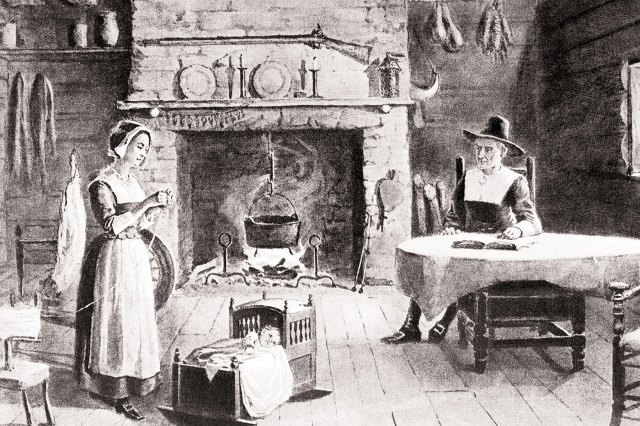
A Day in the Life of a Settler in Colonial America


A Day in the Life of a Settler in Colonial America

  • Colonial settlers, 1760

There was no one typical day in colonial America — the experiences of colonial families differed based on their location, economic status, and individual circumstances. The colonial era not only spanned a large period of time — from the early 17th century to the late 18th century, before the United States became an independent nation — but it also covered a large and varied landscape. The 13 original American colonies stretched from Massachusetts to Georgia, and were populated by settlers from different parts of Europe whose beliefs, traditions, and lifestyles varied greatly.

Colonial settlements ranged from the growing urban centers of the Northeast to the rural agrarian communities of the Southern colonies, and the daily routines of families were impacted by their environment, which included the influence of Indigenous populations. Colonists often adopted or adapted aspects of Native American culture, including agricultural practices and culinary techniques, in order to survive. Weather conditions, seasons, and the availability of resources also played significant roles in shaping daily life in the colonies. But whether you were a farmer, a merchant, a tradesman, or a wife and mother, day-to-day life in the colonies consisted of long days, hard work, and community connections.

Photo credit: ClassicStock/ Archive Photos via Getty Images

The Workday Started Before Dawn

The workday in colonial America typically began before dawn and lasted until the sun went down, and throughout the day, families dedicated themselves to tasks essential for their survival. The morning started with a modest breakfast of bread and milk, porridge, or cornmeal mush with cider or beer before the work began. This sustenance was much-needed: Depending on the time of year, weather, and season, the typical workday could be up to 12 hours long, six days a week. 

Men were expected to provide for their family, and while farming was the primary occupation throughout the colonies, there were a variety of other jobs to be filled, particularly as towns started to grow. Men worked as blacksmiths, carpenters, silversmiths, and in other skilled trades and crafts that contributed to the local economy. Women typically worked in the home, managing all aspects of the household and childcare, including meal preparation and basic education of the children. In addition, married women in non-farming families often worked alongside their husbands in shops or trades, and unmarried or widowed women took jobs as seamstresses, midwives, or tavern keepers. Children often assisted their parents in their work, learning valuable skills for their future roles in the community.

Saturday, January 18, 2025

Trip Reports

https://simpleflying.com/category/trip-reports/ 

JetBlue Slapped With $2 Million Fine

 JetBlue Slapped With $2 Million Fine For "Chronic" Flight Delays By USDOT

Frontier Airlines review

 Frontier Airlines, a U.S.-based ultra-low-cost carrier, has received varied ratings across different aspects of its service.


Safety: In 2025, AirlineRatings.com recognized Frontier Airlines as the safest low-cost carrier in the U.S., highlighting its commitment to safety standards. 

NEW YORK POST


On-Time Performance: According to aviation data provider Cirium, Frontier Airlines had an on-time arrival rate below 72% in 2024, placing it among the lower-performing U.S. carriers in terms of punctuality. 

AP NEWS


Customer Satisfaction: The American Customer Satisfaction Index (ACSI) ranked Frontier Airlines near the bottom among U.S. carriers, with a score of 69 out of 100, just above Spirit Airlines. 

NERDWALLET: FINANCE SMARTER


Passenger Reviews: Travelers have reported mixed experiences with Frontier Airlines. Common feedback includes appreciation for low fares but concerns over additional fees, seat comfort, and customer service. For instance, Skytrax reviews indicate an average rating of 2 out of 10 based on 3,751 reviews. 

SKYTRAX


In summary, while Frontier Airlines is recognized for its safety and competitive pricing, potential passengers should be aware of its performance in punctuality and customer satisfaction, as well as the possibility of additional fees for services.

Wednesday, January 15, 2025

How Were the Egyptian Pyramids Built?

How Were the Egyptian Pyramids Built?


Engraving of the Pyramids of Giza

Ancient Egypt was home to more than 100 pyramids, many of which still stand today. One of the oldest monumental pyramids in Egypt, the Step Pyramid of Djoser, was built sometime between 2667 BCE and 2648 BCE and began a period of pyramid construction lasting more than a thousand years. The most famous monuments are found at the Giza complex, home to the Great Pyramid, the Pyramid of Khafre, and the Pyramid of Menkaure, all built during the Fourth Dynasty around 2600 to 2500 BCE — the golden age of ancient Egypt.

The Egyptian pyramids stand as one of humanity’s most remarkable architectural achievements, and their incredible precision and massive scale have confounded researchers for centuries. Despite numerous theories and extensive archaeological research, the exact methods of their construction remain a subject of scholarly debate. How did ancient Egyptians erect pyramids using millions of massive blocks weighing as much as 2.5 tons each? And how, more specifically, did they move those blocks up the superstructure? To this day, there is no known historical or archaeological evidence that resolves the question definitively. While popular speculation often veers into fantastical explanations — yes, including aliens — serious historians and archaeologists have given much thought as to how these monumental structures might have been erected using the technological capabilities of the time. Here are three of the most likely construction theories. 


Credit: Science History Images/ Alamy Stock Photo

The Herodotus Machine

The first historical account of the construction of the pyramids came from the ancient Greek historian Herodotus in the fifth century BCE. In his Histories, he wrote that the Great Pyramid took 20 years to build and demanded the labor of 100,000 people. Herodotus also wrote that after laying the stones for the base, workers “raised the remaining stones to their places by means of machines formed of short wooden planks. The first machine raised them from the ground to the top of the first step. On this there was another machine, which received the stone upon its arrival and conveyed it to the second step,” and so on. These “Herodotus Machines,” as they later became known, are speculated to have used a system of levers or ropes (or both) to lift blocks incrementally between levels of the pyramid. Egyptian priests told Herodotus about this system — but it’s important to note that this was a long time after the construction of the Great Pyramid, so neither the priests nor Herodotus were actual eyewitnesses to its construction. It is certainly feasible, however, that the machines he described may have been used, either by themselves or, more likely, in conjunction with other methods.

You may also like

Map of Virginia

Why Are Pennsylvania, Massachusetts, Virginia, and Kentucky Called Commonwealths?

U.S. Constitution document

10 Facts About the First 10 Constitutional Amendments

Military ships at sea

What Was the War of 1812?

Advertisement

More from our network

History Facts is part of Optimism, which publishes content that uplifts, informs, and inspires.

6 Tricks Grocery Stores Use To Influence What You Buy

6 Tricks Grocery Stores Use To Influence What You Buy

Interesting Facts


8 Hidden Car Features That Will Change Your Driving Game

8 Hidden Car Features That Will Change Your Driving Game

Better Report


Do You Know What the “P” in “P.M.” Stands For?

Do You Know What the “P” in “P.M.” Stands For?

Word Smarts


6 Often-Overlooked Spaces in Your Home To Declutter Right Now

6 Often-Overlooked Spaces in Your Home To Declutter Right Now

House Outlook


Why You Shouldn’t Go to Bed With Wet Hair

Why You Shouldn’t Go to Bed With Wet Hair

Unique Beauty


Advertisement


Credit: ClassicStock/ Alamy Stock Photo

The External Ramp Theory

Archaeologists generally agree that a system of ramps must have been used, in some form or another, to drag the millions of blocks into their positions in the various pyramids. While there’s no remaining physical evidence of external ramps at the Great Pyramid, traces can be seen around some of the other Old Kingdom structures. One initial theory posited the use of a single, linear ramp built on one side of the pyramid, which would have been gradually raised as the pyramid progressed. But, considering that an 8% slope is about the maximum possible slope for moving such heavy blocks, a ramp such as this would have needed to be about a mile long to reach the top of the pyramid. That would mean constructing the ramp would have been as much of a task as building the pyramid itself, making the theory unlikely, especially for larger structures such as the Great Pyramid.   There are a few other ramp theories, however. One proposes that a series of switchback, or staircase, ramps could have been built, zigzagging up just one face of the pyramid. Traces of these have been found at the Sinki, Meidum, Giza, Abu Ghurob, and Lisht pyramids. Other archaeologists have speculated that a spiraling ramp could have been used, which would have wrapped around the entire pyramid. This is a popular theory, although it does have its problems. As with the straight or linear ramp, this ramp would potentially have been a mile long if it was used to build the Great Pyramid, making it in itself a massive construction project. It’s also not clear how workers could have maneuvered 2.5-ton blocks around the corners of the ramp. Archaeologist Mark Lehner did make a practical demonstration of how this could be done, but it was on a far, far smaller pyramid. 


Credit: Classic Image/ Alamy Stock Photo

The Internal Ramp Theory

In 2007, the French architect Jean-Pierre Houdin offered a new theory to solve the mystery of how Egypt’s Great Pyramid was built. Using archaeological research combined with 3D computer modeling, he argued that the Egyptians used an internal — rather than external — system of ramps to build the pyramid. Workers, he theorized, used an outer ramp to build the first 141 feet, then constructed a spiraling inner ramp to carry stones to the apex of the 482-foot-tall pyramid. Using this technique, Houdin argued, the pyramid could have been built by around 4,000 people instead of 100,000, as other theories suggest.The internal ramp theory was met with much intrigue, with some archaeologists skeptical and others arguing that it’s as valid as any other concept. Interestingly, Houdin’s proposal would explain why no evidence of ramps has been found at the Great Pyramid: They could be still there, hidden inside the structure. He and his team continue to work on the hypothesis, in search of definitive evidence of internal ramp structures with the help of 3D scanning technology. Whether concrete proof will ever be found to support one particular theory is yet to be seen. It’s entirely possible, of course, that the Egyptians utilized various construction techniques when building the pyramids, combining levers and both external and internal ramps — as well as other possible methods — to overcome whatever challenges came their way.

Sunday, January 5, 2025

Downtown San Jose, San Jose, CA Vehicle Theft Rates and Vehicle Theft Maps

https://crimegrade.org/vehicle-theft-downtown-san-jose-san-jose-ca/?utm_source=chatgpt.com#google_vignette 

10 Most Commonly Stolen Vehicles in California (2022 Data)


10 Most Commonly Stolen Vehicles in California (2022 Data)

Here’s a list of the most commonly stolen vehicles in California, courtesy of the National Insurance Crime Bureau (NICB):

  1. Honda Civic (2000 model most targeted)
  2. Honda Accord (1997 model most targeted)
  3. Toyota Camry (1999 model most targeted)
  4. Toyota Corolla (2014 model most targeted)
  5. Chevrolet Silverado (2004 model most targeted)
  6. Ford F-150 (2006 model most targeted)
  7. Nissan Altima (2015 model most targeted)
  8. GMC Sierra (2005 model most targeted)
  9. Honda CR-V (2001 model most targeted)
  10. Dodge Ram (2001 model most targeted)

Why These Vehicles?

  • Older Models: Popular vehicles manufactured before the mid-2000s often lack advanced anti-theft technology, making them easier to steal.
  • High Parts Demand: These vehicles are reliable and widely owned, creating a lucrative black market for spare parts.
  • Catalytic Converters: Trucks like the Silverado and F-150 are targeted for their catalytic converters, which contain precious metals.

The 10 most commonly stolen vehicles in California, as reported by the National Insurance Crime Bureau (NICB), often include older models of popular cars like Hondas, Toyotas, and trucks. This trend can be explained by several factors:


1. High Popularity of Certain Models

  • Vehicles like the Honda Civic, Honda Accord, and Toyota Camry are widely owned. Their prevalence increases the likelihood of theft because:
    • More vehicles on the road mean more targets for thieves.
    • Demand for parts from these cars is high in both legal and illegal markets.

2. Value of Spare Parts

  • Older models often have interchangeable parts that are easy to sell.
  • Engines, catalytic converters, airbags, and radios from these vehicles are frequently stolen for resale.

3. Lower Security Features

  • Older vehicles lack modern anti-theft technologies like:
    • Immobilizers.
    • GPS tracking systems.
    • Advanced keyless entry systems.
  • This makes them easier for thieves to target.

4. Catalytic Converter Thefts

  • Trucks and SUVs, like the Chevrolet Silverado, often top the list because their catalytic converters are easily accessible and contain valuable metals such as platinum, palladium, and rhodium.

5. Black Market Demand

  • Parts for vehicles that are no longer manufactured, such as older Toyota pickup trucks, can fetch high prices in the black market.

6. Targeting Specific Regions

  • California’s population density and urban areas increase opportunities for theft.
  • Ports in California allow stolen vehicles to be quickly exported.

7. Ease of Resale

  • Popular vehicles blend in, making them less noticeable to law enforcement.
  • Thieves often forge documents to resell these vehicles in other states or countries.

Tips to Prevent Vehicle Theft


Tips to Prevent Vehicle Theft

  1. Use Anti-Theft Devices:
    • Steering wheel locks (e.g., The Club).
    • Car alarms.
    • GPS tracking systems.
  2. Park Smart:
    • Park in well-lit areas or garages.
    • Use surveillance cameras if parking at home.
  3. Etch Your VIN:
    • Engraving your vehicle identification number (VIN) on windows and parts can deter thieves.
  4. Install a Kill Switch:
    • A hidden switch disables your car’s ignition system.
  5. Lock Your Car:
    • Always lock doors, close windows, and never leave keys or valuables inside.
  6. Be Alert:
    • Stay updated on theft trends in your area.

San Jose car thefts on the rise, beating national trends

https://sanjosespotlight.com/san-jose-car-thefts-on-the-rise-beating-national-trends/?utm_source=chatgpt.com 

Vallejo crime rate

 Vallejo, California, has a crime rate higher than both state and national averages. According to NeighborhoodScout, Vallejo's crime rate is 52 per 1,000 residents, placing it among the highest in the U.S. Residents face a 1 in 19 chance of becoming a victim of either violent or property crime. The violent crime rate is notably high, with a 1 in 102 chance of being a victim, and the property crime rate stands at 43 per 1,000 residents. 

NEIGHBORHOODSCOUT


AreaVibes reports that Vallejo's total crime rate is 5,206 per 100,000 people, exceeding the national average by 124%. Violent crimes, including assault, robbery, rape, and murder, are 163% higher than the national average, while property crimes are 116% higher. 

AREAVIBES


CrimeGrade.org assigns Vallejo a B grade for overall crime, indicating that the city's crime rate is slightly lower than the average U.S. city. However, crime rates vary within the city; the north part is generally considered safer, with a 1 in 43 chance of being a crime victim, compared to the west neighborhoods, where the chance is as high as 1 in 18. 

CRIMEGRADE 

https://www.neighborhoodscout.com/ca/vallejo/crime?utm_source=chatgpt.com


The Vallejo Police Department provides a crime mapping dashboard for real-time information on crime incidents, offering residents insights into local crime trends. 

VALLEJO POLICE DEPARTMENT

https://www.areavibes.com/vallejo-ca/crime/?utm_source=chatgpt.com

In summary, Vallejo experiences higher crime rates compared to state and national averages, with significant variations across different neighborhoods. Residents and visitors should remain vigilant and consult local resources for the most current information on safety and crime prevention.

https://www.neighborhoodscout.com/ca/vallejo/crime?utm_source=chatgpt.com

Recent Trends in California's Crime Policies

The Atlantic

Why California Is Swinging Right on Crime

209 days ago

Saturday, December 21, 2024